

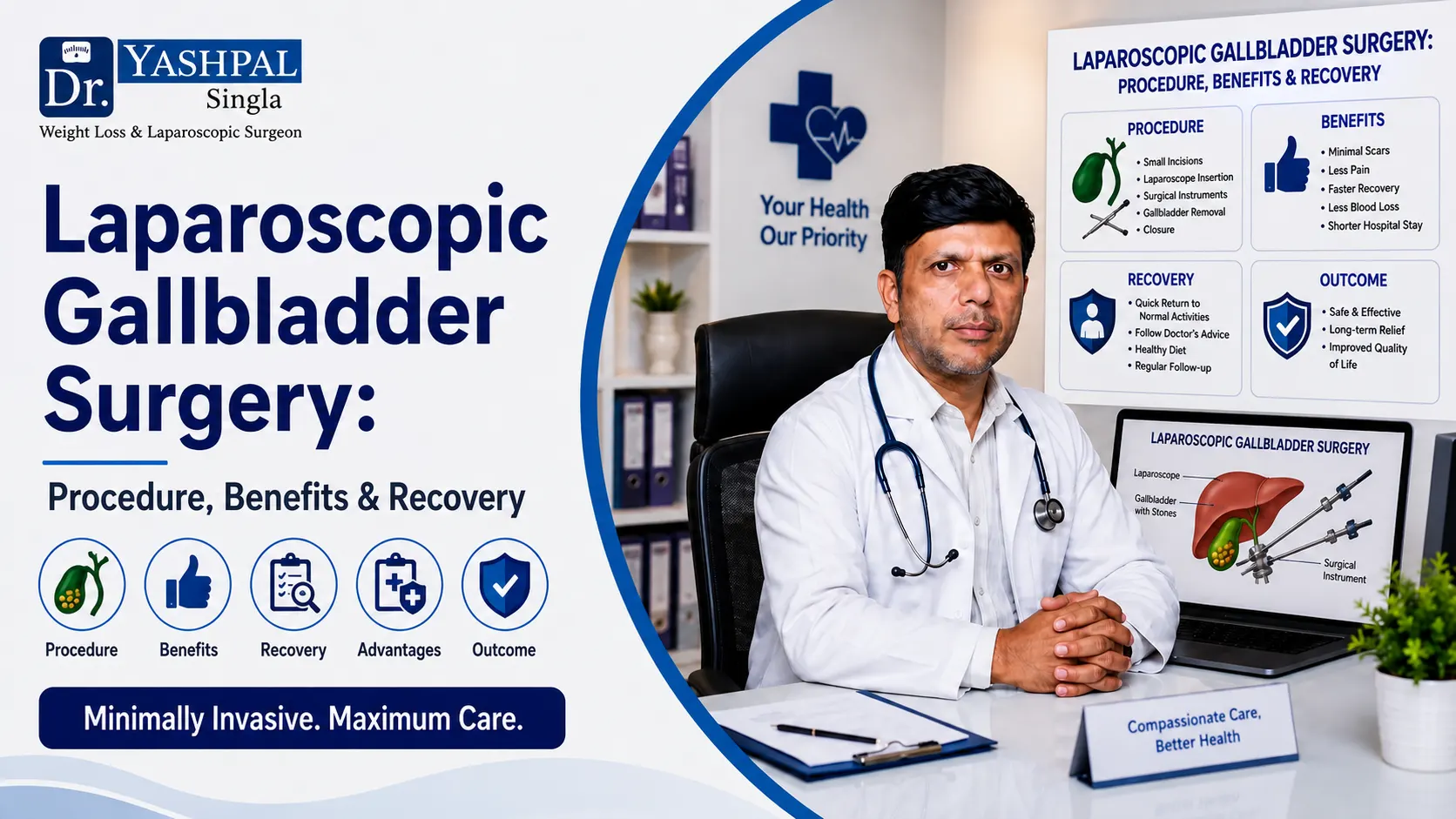
If a surgeon has just told you that you need your gallbladder removed, the word “surgery” probably feels heavier than it should. Here’s the reassuring truth: laparoscopic gallbladder surgery is one of the most common, safest, and well-understood procedures performed today.
It’s a keyhole procedure with a few tiny cuts instead of one large incision done to remove a gallbladder that’s causing pain, infection, or blockage from gallstones. Most patients go home within a day or two and are back to normal life within a week.
Let’s walk through exactly what happens, why it’s usually the better choice over open surgery, and what recovery actually looks like day by day, not just in vague reassurances.
What Is Laparoscopic Gallbladder Surgery?
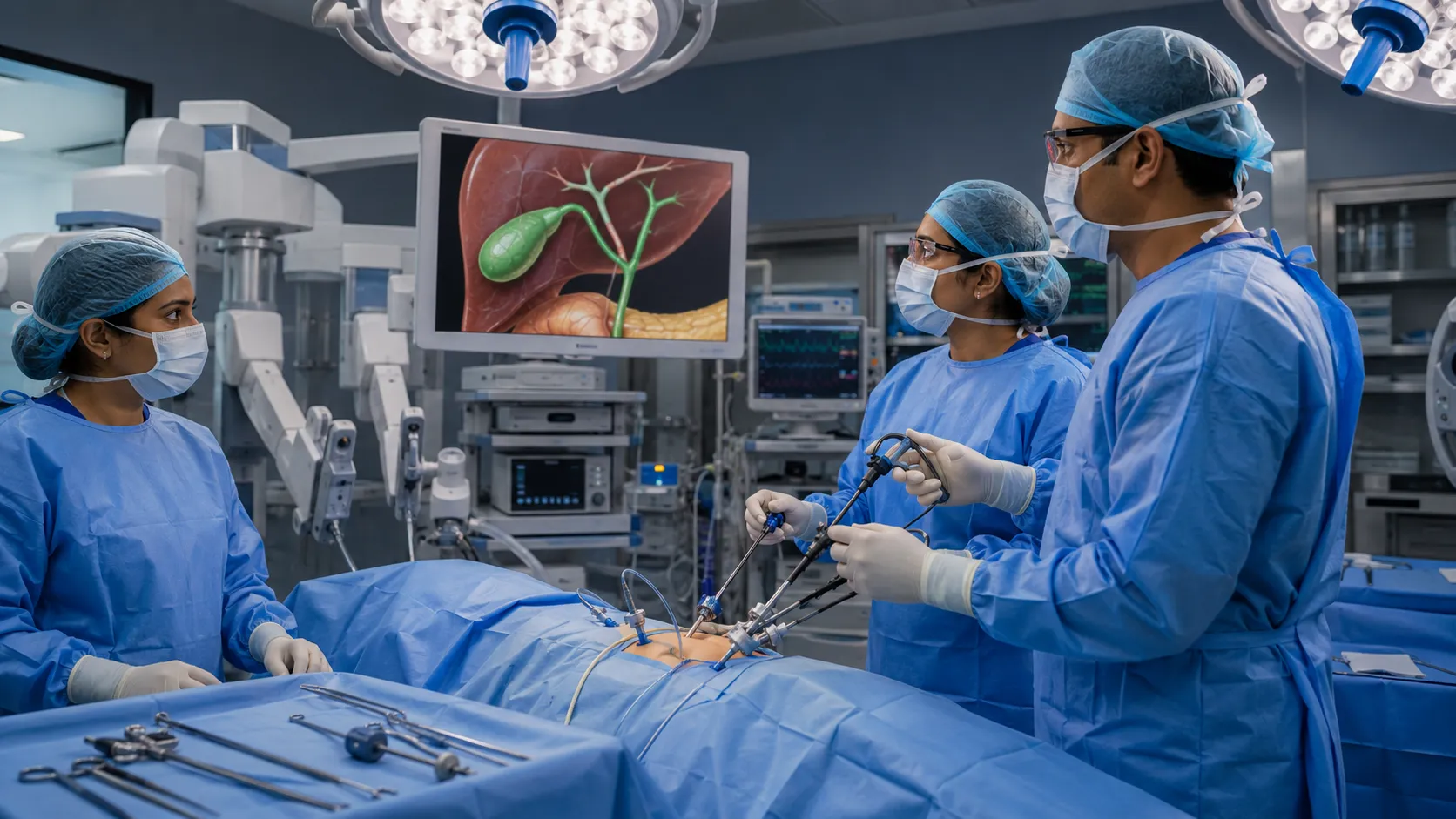
In medical terms, this procedure is called a laparoscopic cholecystectomy. Instead of opening up the abdomen with one large cut, the surgeon makes 3–4 small incisions, each about half an inch, and works through them using a tiny camera and long, thin instruments.
The camera projects a magnified view of the abdomen onto a screen, letting the surgeon see everything clearly while working through those small openings. The gallbladder is carefully separated from the liver and bile duct, then removed through one of the incisions.
It’s precise, it’s been refined over decades, and for most patients, it’s genuinely far gentler than it sounds.
Is Gallbladder Surgery a Minor or Major Surgery?
This question comes up constantly, and the honest answer sits somewhere in between. Technically, removing an organ makes this a major surgery; it involves general anaesthesia and internal work inside the abdomen. But in terms of impact on the body and recovery, it behaves much more like a minor procedure:
- Usually completed in 30–60 minutes
- Most patients go home within 24–48 hours
- Normal walking often begins the same day
- Return to light routine within a week is common
- Full recovery typically within 2 weeks
So while it’s classified as major on paper, the lived experience for most patients thanks to the laparoscopic approach specifically feels far closer to a minor procedure than an open surgery ever would.
How Laparoscopic Gallbladder Surgery Is Performed (Step by Step)
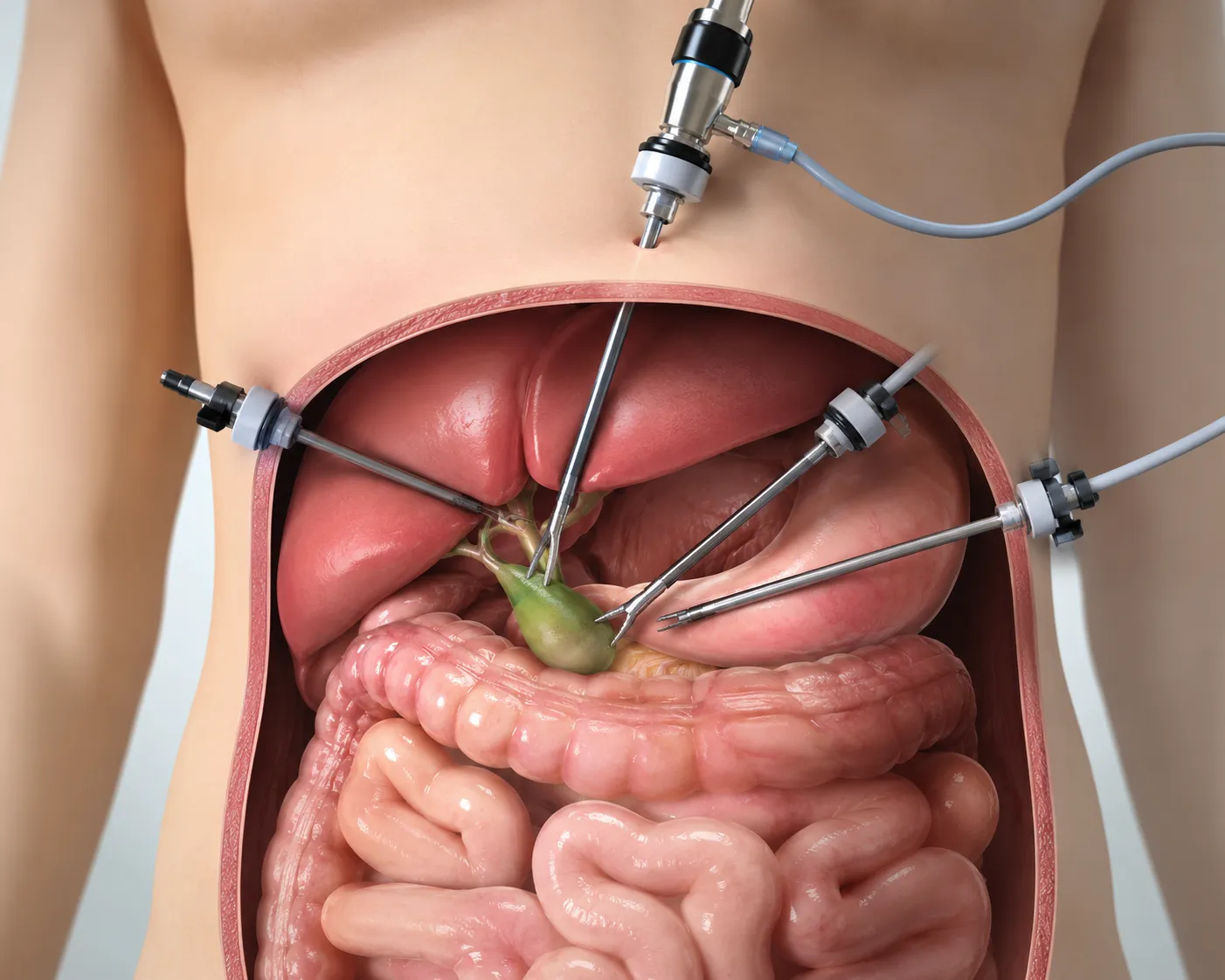
Knowing the actual steps tends to calm nerves more than any reassurance can. Here’s what typically happens:
- Anaesthesia You’re given general anaesthesia, so you’re fully asleep and feel nothing during the procedure.
- Small incisions The surgeon makes 3 to 4 tiny cuts in the abdomen, usually near the navel and upper right side.
- Creating space Carbon dioxide gas is gently used to inflate the abdomen, creating room for the surgeon to see and work clearly.
- Camera insertion A laparoscope (a thin camera) is inserted through one incision, projecting the view onto a screen.
- Removing the gallbladder Using specialised instruments through the other incisions, the surgeon carefully detaches the gallbladder from the liver and bile duct.
- Extraction The gallbladder, along with the stones inside it, is removed through one of the small incisions.
- Closing up The gas is released, incisions are closed with a few stitches or surgical glue, and the procedure is complete.
The entire process is usually done within an hour, and most patients don’t even remember the operating room just walking in, and later waking up in recovery.
Benefits of Laparoscopic Over Open Gallbladder Surgery
Open surgery, which uses one larger incision, used to be the standard approach. Today, it’s mostly reserved for complicated cases. Here’s why laparoscopic has become the preferred choice for the vast majority of patients.
Smaller Scars, Less Pain
Instead of one long incision across the abdomen, you get a few small marks that fade significantly over time. Smaller cuts also mean noticeably less post-operative pain, since there’s far less tissue disruption for the body to heal from.
Shorter Hospital Stay
Open surgery often requires 5–7 days in the hospital. Laparoscopic surgery, in contrast, usually means going home within a day, sometimes even the same evening if recovery is smooth.
Faster Return to Work
Because the body heals faster with smaller incisions, most patients are back to desk jobs within a week, and to more physical work within 2–3 weeks compared to 4–6 weeks after open surgery.
How Long Should You Rest After Laparoscopic Gallbladder Surgery?

This depends a bit on your body and your work, but here’s a realistic general guide.
- First 2–3 days: Mostly rest at home, gentle walking indoors, avoiding lifting anything heavy
- First week: Light activity, short walks, avoiding strain or bending too much
- Week 2: Most people feel noticeably better; desk jobs are often resumed around this point
- Weeks 3–4: Gradual return to more physical activity and exercise
- By 4–6 weeks: Most patients are fully back to their normal routine, including heavier lifting or exercise
The golden rule doctors repeat often: listen to your body, not the calendar. If something feels like too much too soon, ease back and give it another day or two.
Who Is a Candidate for the Laparoscopic Approach (vs Open Surgery)
Most patients with gallstones are excellent candidates for the laparoscopic approach. However, in certain situations, a surgeon may recommend open surgery instead, or may need to switch to it during the procedure:
- Severe, longstanding gallbladder inflammation with significant scarring
- Prior abdominal surgeries that have created dense internal adhesions
- Suspected gallbladder cancer
- Certain bleeding disorders or complex medical conditions
- Extremely advanced pregnancy, in specific cases
For the vast majority of patients, though, the laparoscopic route is not just possible, it’s the clearly preferred approach safer recovery, less pain, better outcomes.
Risks & Possible Complications
Every surgery carries some risk, and it’s better to know this honestly than to be surprised later. With laparoscopic gallbladder surgery, complications are uncommon, but worth being aware of:
- Minor bleeding or infection at incision sites
- Bile duct injury (rare, but the most serious potential complication)
- Reaction to anaesthesia
- Retained stones in the bile duct, occasionally needing a follow-up procedure
- Conversion to open surgery if complications arise during the operation
These risks are genuinely low in experienced surgical hands, and most patients recover without any complications at all. A good pre-surgery evaluation goes a long way in minimising these risks further.
Laparoscopic Gallbladder Surgery at Meyash Hospital, Hisar
At Meyash Hospital, Hisar, laparoscopic gallbladder surgery is performed using modern equipment and a well-practised surgical approach, focused on patient safety and comfort at every stage. The process here typically includes:
- A thorough pre-surgery evaluation, including ultrasound and blood work
- Clear, honest communication about what to expect before, during, and after surgery
- The procedure itself, performed with attention to minimising pain and scarring
- Structured post-operative care and follow-up to ensure smooth healing
The hospital’s approach is built around making a genuinely necessary surgery feel less overwhelming from that first consultation through to your final follow-up visit.
Dr. Yashpal Singla’s Experience With Laparoscopic Cholecystectomy
Dr. Yashpal Singla brings considerable hands-on experience specifically in laparoscopic techniques, an approach that matters enormously when it comes to gallbladder removal.
Patients are guided through the entire journey understanding why surgery is needed, what the procedure involves, and what recovery will genuinely feel like rather than being handed a date and a form. That clarity tends to ease a lot of the pre-surgery anxiety patients quietly carry in.
Cost & Insurance Coverage in Hisar
Cost is a fair and practical concern, and it’s worth discussing openly rather than avoiding it. Laparoscopic gallbladder surgery costs in Hisar vary depending on hospital stay duration, any pre-existing complications, and the specific surgical package chosen.
- Most standard, uncomplicated cases fall within a fairly predictable package range
- Health insurance commonly covers the procedure, since it’s a well-recognised, medically necessary surgery
- Cashless facilities are often available depending on your specific insurer and policy
- It’s always worth confirming exact costs and coverage directly with the hospital before your procedure, since individual policies vary
Getting this clarity upfront removes one more source of stress from an already significant decision.
Recovery Timeline Week by Week
Here’s a realistic, honest week-by-week picture of what recovery tends to look like:
- Day 1–2: Mild soreness at incision sites, some shoulder discomfort from the gas used during surgery, gentle walking encouraged
- Day 3–5: Pain noticeably reduces, light home activities become manageable
- Week 1: Most people feel considerably more like themselves, though heavy lifting is still off-limits
- Week 2: Return to desk work is common; energy levels continue improving
- Weeks 3–4: Gradual reintroduction of exercise and more physical activity
- Week 6: Most patients are fully cleared for all normal activities, including strenuous exercise
Everyone heals at a slightly different pace, and that’s completely normal. This timeline is a guide, not a strict rulebook.
Conclusion
Laparoscopic gallbladder surgery has genuinely transformed what used to be a long, painful recovery into a quick, manageable procedure for most patients. Smaller scars, shorter hospital stays, and a faster return to normal life make it the clear preferred choice over open surgery whenever it’s medically appropriate. If your doctor has recommended this route, that recommendation is usually good news, not something to dread.
CTA Section
If gallstones are affecting your daily life, laparoscopic surgery could be your fastest path back to comfort. Dr. Yashpal Singla at Meyash Hospital, Hisar offers expert, minimally invasive gallbladder removal with a smooth, well-supported recovery. Book your consultation today.
FAQs
Q: How much bed rest is needed after gallbladder surgery?
Most patients need only 2–3 days of proper rest at home, followed by gentle activity. Strict bed rest isn’t usually required, since gentle walking actually supports faster healing after laparoscopic surgery.
Q: How serious is laparoscopic gallbladder surgery?
It’s classified as major surgery since an organ is removed under general anaesthesia, but in practice it behaves like a minor procedure, with low complication rates and most patients recovering fully within weeks.
Q: How many incisions does laparoscopic gallbladder surgery need?
Typically 3 to 4 small incisions are made, each around half an inch long. One holds the camera, while the others allow the surgical instruments to remove the gallbladder safely.
Q: Can laparoscopic surgery be converted to open surgery mid-operation?
Yes, occasionally. If the surgeon encounters unexpected scarring, bleeding, or complications, converting to open surgery mid-procedure ensures safety. This happens in a small minority of cases and is a safety decision, not a failure.
Q: When can I eat normal food after laparoscopic gallbladder surgery?
Most patients start with light, low-fat food within a day of surgery, gradually returning to a normal diet over 1–2 weeks as digestion adjusts to functioning without a gallbladder.
Q: Is laparoscopic gallbladder surgery covered under cashless insurance at Meyash Hospital?
Yes, in most cases. Laparoscopic gallbladder surgery is commonly covered under standard health insurance plans, with cashless facilities available depending on the insurer. It’s best to confirm exact coverage with the Meyash Hospital, Hisar team.
This article has been reviewed by the medical team at Meyash Hospital, Hisar. For personalized advice, consult Dr. Yashpal Singla or our specialists directly.