

Maybe you’ve tried the diets. Maybe the walking, the gym memberships that got used for three months, the apps that count calories until you stop opening them. And maybe you’re here now because a doctor finally said the word “surgery,”
and it landed somewhere between relief and fear, relief that someone finally named an option that might actually work, fear because surgery still sounds like a big, permanent thing to sign up for.
Here’s the direct answer, before anything else. Bariatric surgery is a group of surgical procedures that change the size or structure of the stomach, and sometimes the digestive tract, to help with significant, lasting weight loss when other methods haven’t worked. It’s not a shortcut, and it isn’t cosmetic.
For people with severe obesity and the health problems that tend to come with it, it’s often the single most effective medical intervention available, backed by decades of data most crash diets simply don’t have.
It’s a real decision, and it deserves real information rather than the fear-based headlines that tend to circulate around it, the horror stories about “unnatural” weight loss, the assumption that it’s giving up rather than choosing a different, evidence-based path. So let’s actually walk through what it is, who it’s for, and what the road through it genuinely looks like, start to finish.
What Exactly Is Bariatric Surgery?
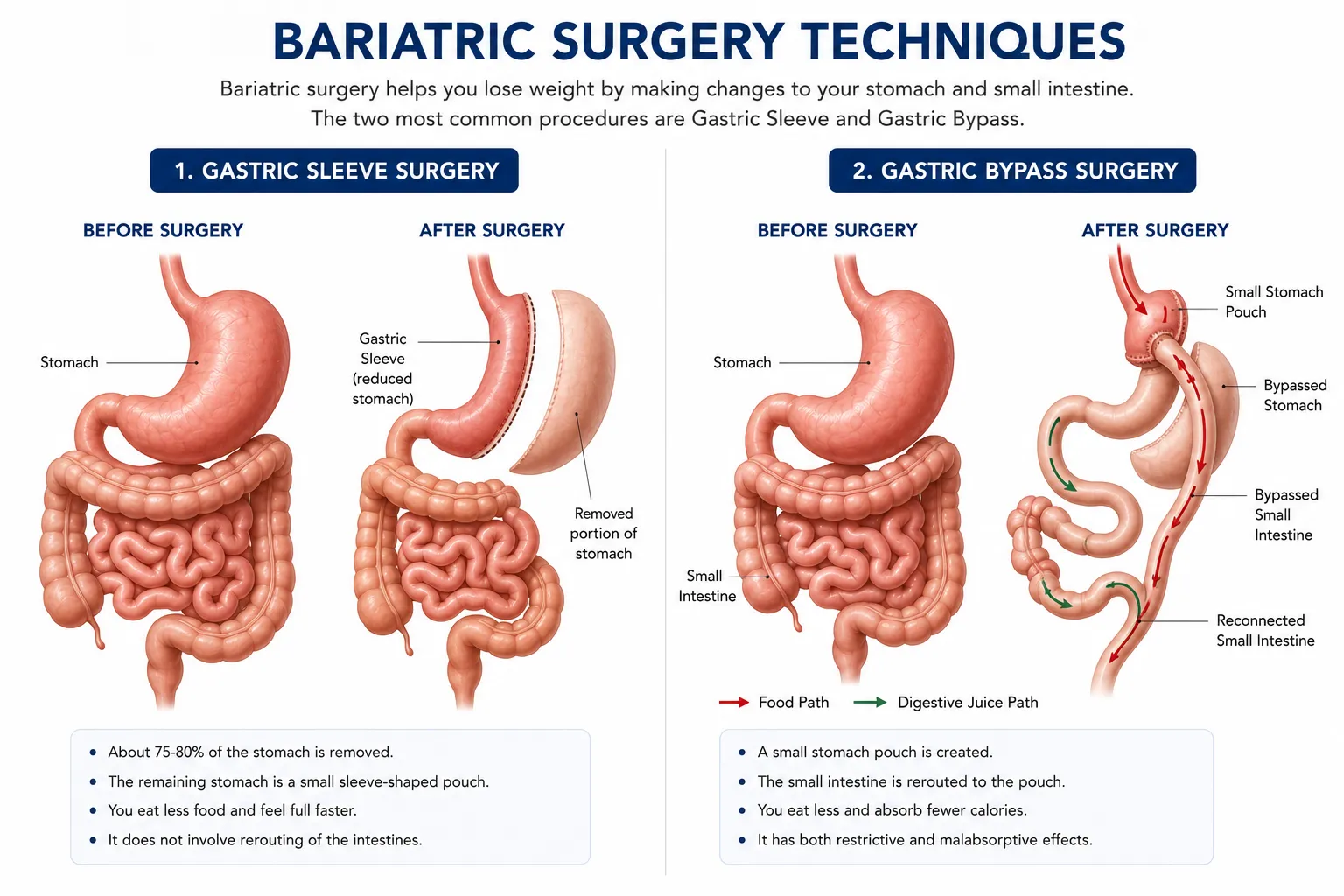
At its core, this type of surgery works by changing how much food the stomach can hold, how the body absorbs it, or both. Some procedures simply reduce stomach size, so you feel full on much smaller amounts of food. Others also reroute part of the digestive tract, changing how calories and nutrients are absorbed along the way.
The result, across most procedures, is a combination of eating less and processing food differently, which together tend to produce weight loss that diet and exercise alone often can’t sustain for people with severe obesity.
It’s worth saying plainly: this isn’t about willpower failing. Severe obesity involves real physiological changes, hormones that drive hunger, a metabolism that’s adapted to store rather than burn, that make sustained weight loss through diet alone genuinely difficult for many people, no matter how disciplined they are.
Surgery addresses some of those underlying mechanisms directly, which is part of why it tends to work where other approaches haven’t, and why it’s recognized as a legitimate medical treatment rather than a cosmetic choice by major medical bodies worldwide.
Who Is a Good Candidate for Bariatric Surgery?
BMI Guidelines Explained
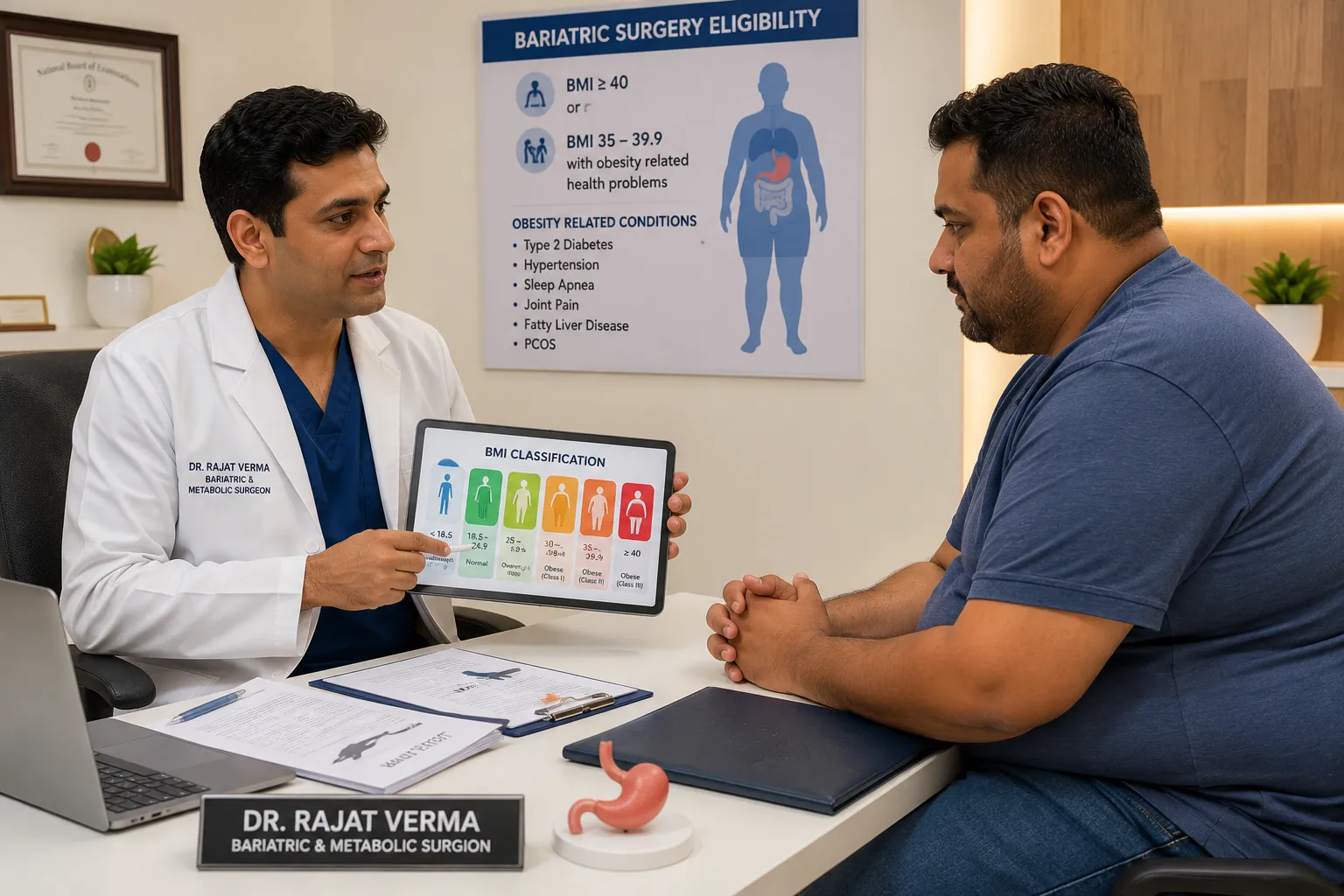
The starting point is usually BMI, Body Mass Index, a rough measure of weight relative to height, calculated from your weight and height together. Generally, a BMI of 37.5 and above on its own, or 32.5 and above alongside a related health condition like type-2 diabetes or high blood pressure,
puts someone in the range where this kind of surgery becomes a realistic option worth discussing. These aren’t arbitrary cutoffs, they reflect the point at which the health risks of remaining at that weight generally outweigh the risks of surgery itself, based on decades of outcome data across large patient populations.
Related Health Conditions That Qualify You
BMI alone doesn’t tell the whole story. Conditions like type-2 diabetes, obstructive sleep apnea, high blood pressure, high cholesterol, fatty liver disease, and joint problems driven by excess weight all factor into the decision, sometimes qualifying someone for surgery at a lower BMI than they’d otherwise need.
A surgeon will look at the complete picture, your weight history, your health conditions, what you’ve already tried, your age and overall fitness for anesthesia, not just a single number on a chart. This is exactly why the same BMI can lead to different recommendations for two different patients.
Types of Bariatric and Weight-Loss Surgery
1. Gastric Sleeve Surgery (Sleeve Gastrectomy)
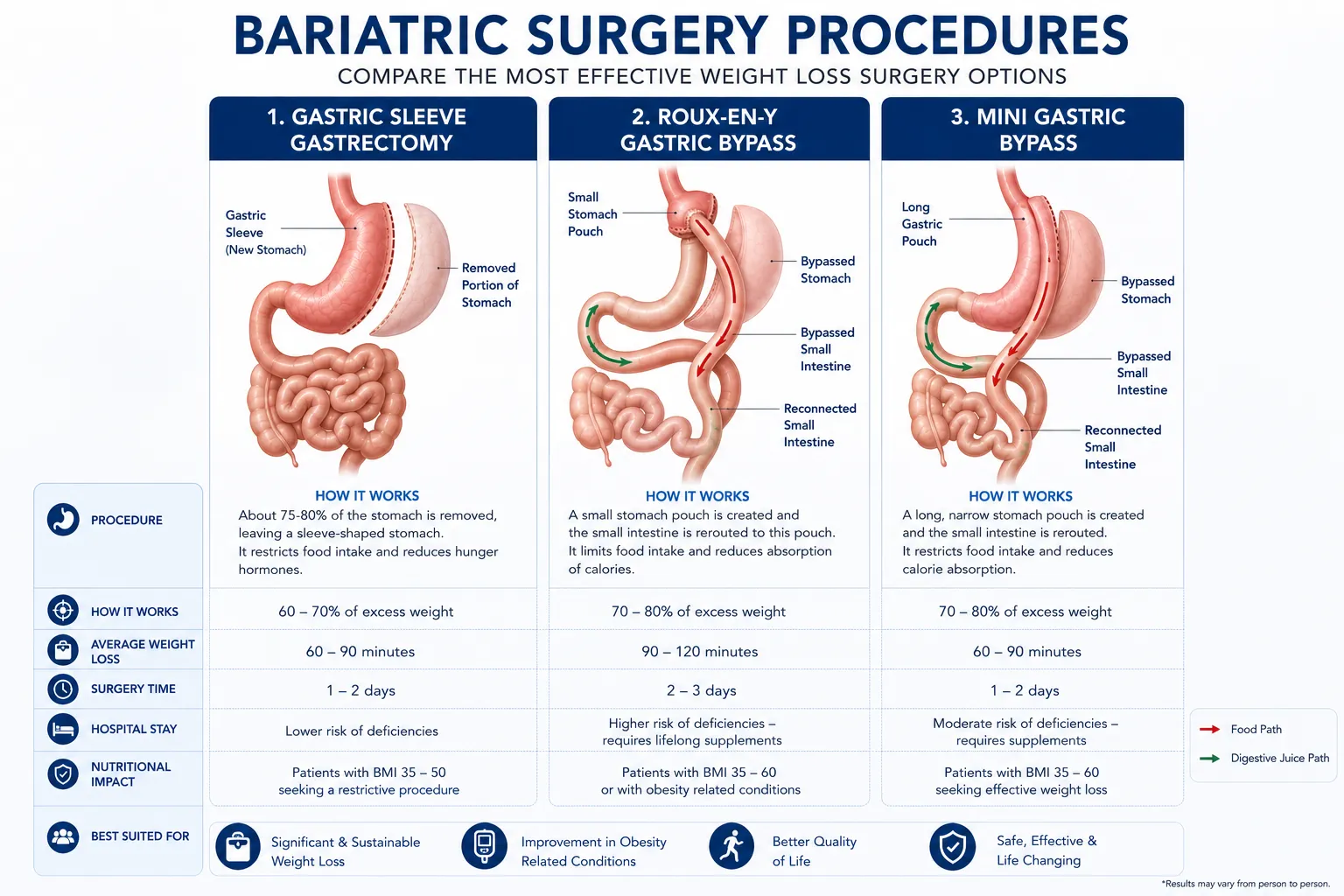
The most commonly performed weight-loss procedure today, largely because it offers strong, consistent results with a somewhat simpler operation than bypass surgery. The surgeon removes roughly 75–80% of the stomach, leaving behind a narrow, banana-shaped sleeve.
This limits how much food you can eat at once and also reduces production of the hormone that drives hunger, which is part of why appetite itself tends to genuinely decrease after the procedure, not just the stomach’s capacity to hold food.
2. Gastric Bypass (Roux-en-Y)
A more involved procedure that creates a small stomach pouch and reroutes part of the small intestine to connect directly to it, bypassing a section of the digestive tract. This reduces both how much you can eat and how many calories get absorbed.
It tends to produce strong, durable results, particularly for patients with type-2 diabetes, where blood sugar often improves dramatically within days of surgery, well before significant weight loss has even occurred, and it remains one of the most studied weight-loss procedures worldwide.
3. Mini Gastric Bypass
A somewhat simpler variation of the standard bypass, involving one connection point instead of two, which can mean a shorter operating time and, for some patients, a somewhat quicker recovery.
It offers similar weight-loss potential to a full bypass for many patients, though the right choice between the two depends on individual factors, prior surgeries, specific health conditions, and personal anatomy, that your surgeon will walk you through in detail.
4. Revision Bariatric Surgery
For patients who’ve already had a weight-loss procedure but experienced insufficient weight loss, regained weight over time, or developed complications, revision surgery adjusts or redoes the original procedure.
These cases are generally more technically complex than a first-time surgery, since the anatomy has already been altered once, and they call for a surgeon with specific experience in revision cases rather than general bariatric experience alone.
Causes and Risk Factors Behind Severe Obesity
Severe obesity is rarely about one single cause, it’s usually a mix of genetics, metabolism, environment, and circumstance layering on top of each other over years. Genetic factors influence how the body stores fat and regulates hunger, and family history plays a real role that has nothing to do with discipline.
Add to that a modern environment built around processed, calorie-dense food, sedentary work and commuting, disrupted sleep patterns, and stress, and the cumulative effect, over enough years, is severe obesity that’s genuinely difficult to reverse through willpower alone.
Certain medications and underlying hormonal conditions, such as thyroid disorders or PCOS, can also contribute, which is part of why a proper medical evaluation matters before assuming lifestyle is the only factor at play.
Health Risks of Untreated Obesity
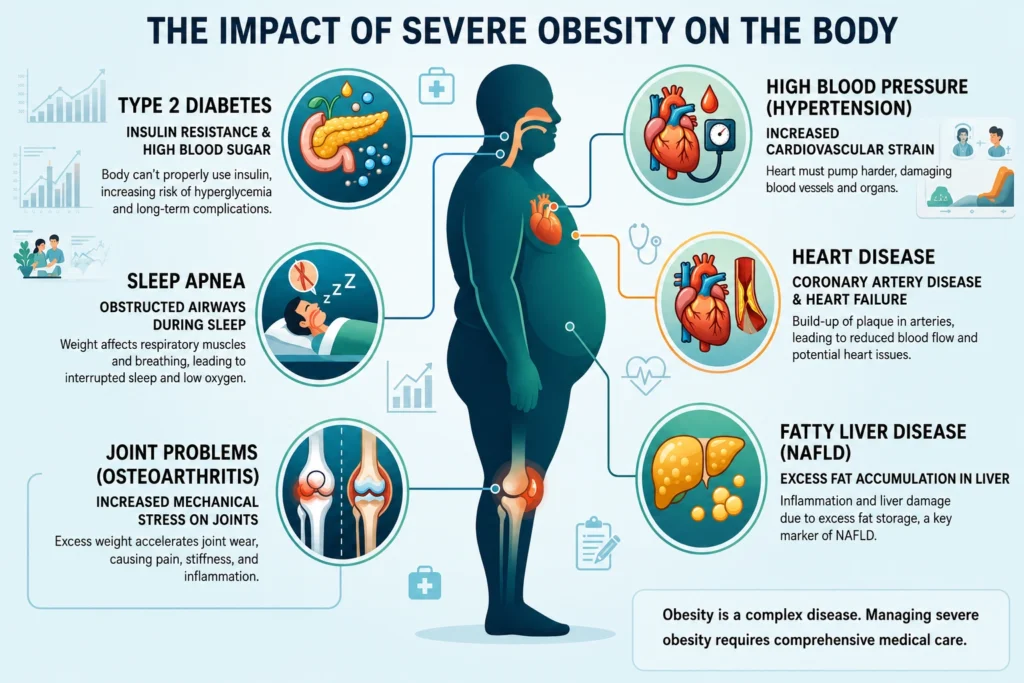
This is the part that often gets lost in the fear around surgery itself: staying at a severely elevated weight carries its own serious, well-documented risks. Type-2 diabetes, heart disease, high blood pressure, stroke, obstructive sleep apnea, joint deterioration, fatty liver disease, and certain cancers all become significantly more likely with severe, prolonged obesity.
Many of these conditions also quietly reinforce each other, poor sleep from sleep apnea makes weight management harder, joint pain limits the exercise that might otherwise help, and the cycle continues.
For many patients, the honest comparison isn’t “surgery versus no risk”, it’s “the risk of surgery versus the ongoing, compounding risk of remaining at a dangerously high weight for years to come.” Once that comparison is laid out clearly,
with an experienced surgeon walking through the actual numbers rather than vague warnings on either side, the decision often looks quite different than it did from the outside.
Can You Eat Normally After Gastric Bypass? Life After Bariatric Surgery
Not immediately, and not quite in the way you ate before, but “normal” does eventually return, just recalibrated to a smaller, more deliberate version of what it used to be. In the weeks right after surgery, you’ll move through a careful progression from liquids to purees to soft foods before reaching regular solid food,
usually over six to eight weeks, with each stage giving the healing stomach time to adjust before the next.
Once you’re fully healed, most patients do eat regular food again, smaller portions, generally, and with more attention paid to protein and nutrients than before, since the stomach’s reduced capacity means every meal has to count more toward actual nutrition rather than volume.
Certain things become harder to tolerate for some patients, particularly very sugary or very fatty foods, especially after gastric bypass, where “dumping syndrome” (a rush of undigested sugar into the intestine, causing nausea, cramping, and discomfort) can act as its own built-in deterrent against the foods that caused problems in the first place.
Most people describe this less as deprivation and more as a genuinely different relationship with food, smaller meals, better attention to what’s actually being eaten, and often, less interest in the foods that used to be hardest to resist. Social eating, festivals, family meals, these all remain part of life, just navigated a little differently than before.
When to Consider Bariatric Surgery
If you’ve genuinely tried structured diet and exercise programs, possibly with medical weight-loss support or supervised programs, and haven’t achieved lasting results, and your weight is now affecting your health, whether through diabetes, joint pain, sleep apnea, or simply how you feel day to day, that’s the point worth raising with a surgeon directly,
rather than trying one more diet plan alone.
There’s often a quiet sense of having “failed” at previous attempts that keeps people from bringing this up sooner than they should. Worth remembering: struggling against biology that’s working against you isn’t failure, and a surgical option existing doesn’t mean every previous effort was wasted, it means the next step should actually match the scale of the problem.
Diagnosis and Pre-Surgery Evaluation
Tests, Screening, and the Psychological Assessment
Before surgery, expect a thorough workup, blood tests, an assessment of your heart and lung health, an endoscopy to examine the stomach, and screening for related conditions like diabetes or sleep apnea.
Most reputable weight-loss surgery programs also include a psychological evaluation, not because anything is presumed to be wrong, but because a lasting relationship with food after surgery genuinely benefits from going in prepared, with realistic expectations and the right support in place.
This step is often the one patients feel most unsure about, but it’s meant to support you, not gatekeep the procedure.
Bariatric Surgery Treatment at Meyash Hospital, Hisar
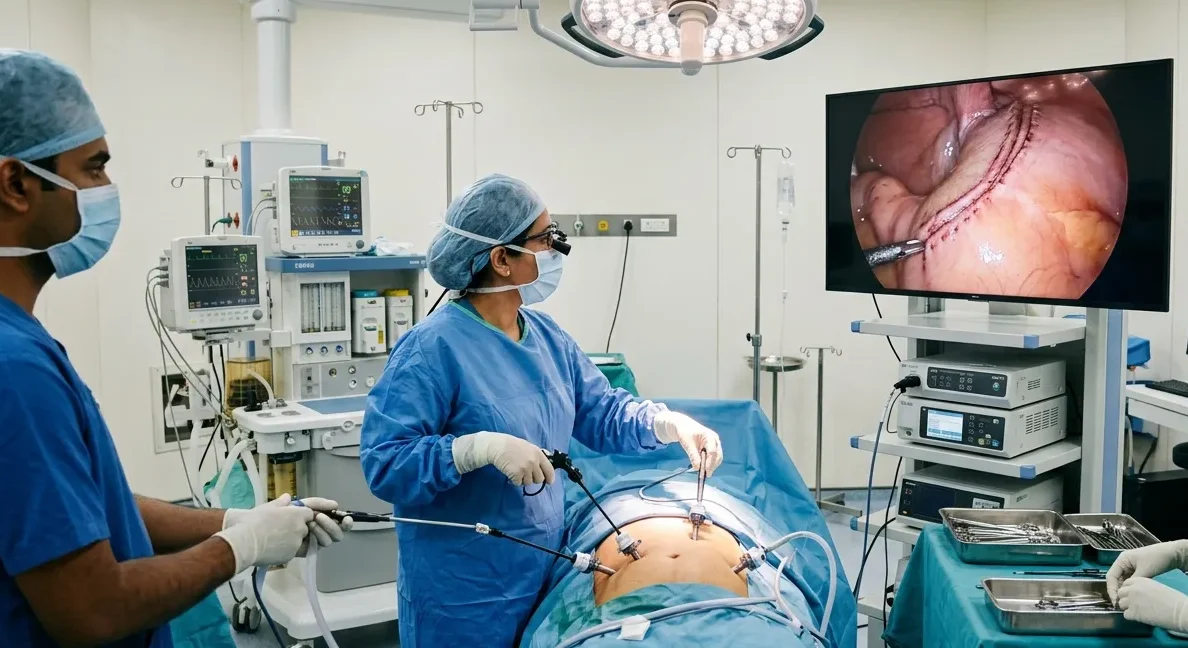
This kind of surgery is one of the specific areas Meyash Hospital has built deep expertise around, supported by anaesthetists, dietitians, and clinical psychologists working alongside the surgical team, because sustainable weight loss depends on more than the operation itself,
and the hospital’s structure reflects that reality rather than treating surgery as a standalone event.
Why Dr. Yashpal Singla for Bariatric Surgery (3,000+ Surgeries Performed)
Dr. Yashpal Singla has personally performed over 3,000 bariatric surgeries, part of a broader career that includes 25,000+ laparoscopic surgeries and more than 100,000 patients treated, including his time as Former HOD & Senior Consultant at Jindal Hospital, Hisar.
For a decision this personal, that volume of experience matters, it means he’s seen the full range of outcomes, complications, and patient circumstances that a lower-volume surgeon simply hasn’t encountered as often, and it shows in how specific and realistic the guidance tends to be during consultation.
Every patient meets him directly for the initial consultation and every follow-up after, with a plan built around their specific BMI, health conditions, and goals rather than a one-size-fits-all protocol.
That personal continuity, the same surgeon from first conversation through years of follow-up, is something patients travelling in from across the Hisar region mention repeatedly.
Cost of Bariatric Surgery in Hisar and Nearby Haryana
The cost of weight-loss surgery varies based on which procedure is recommended, the complexity of your specific case, hospital stay length, and any pre-existing conditions that need to be managed alongside the surgery itself.
A gastric sleeve and a full gastric bypass, for instance, involve different operating times and follow-up requirements, and the cost reflects that, as does whether any revision work or additional monitoring is needed for conditions like diabetes or sleep apnea alongside the main procedure.
For patients from Hisar and across nearby Haryana towns like Hansi, Barwala, and Adampur, Meyash Hospital’s empanelment with major insurers and TPAs, including Star Health, Care Health, Niva Bupa, HDFC ERGO, and the Haryana Government and Ayushman Bharat panels, means cashless treatment is available for those who qualify,
and this category of surgery is increasingly recognized under many policies given the serious health conditions it treats, particularly when diabetes or heart-related conditions are documented alongside the weight itself.
The hospital’s billing team will review your specific coverage and outline payment options clearly before your surgery date, so the financial side of the decision is settled well before you’re on the operating table.
Recovery After Bariatric Surgery

Hospital Stay and First Week
Most laparoscopic weight-loss procedures involve a hospital stay of one to three days. The first week at home is about gentle movement, staying on top of the liquid diet phase, and resting more than you’re used to, fatigue is common as your body adjusts to eating dramatically less than it’s used to,
and this is completely normal rather than a sign of a problem.
Diet Progression After Surgery (Liquids to Solids)
You’ll move through clear liquids, then thicker liquids, then pureed food, then soft food, and finally regular textures, typically over six to eight weeks, with your surgical team and dietitian guiding each transition carefully.
Protein intake is prioritized throughout this progression, since it supports healing and helps preserve muscle mass while the weight comes off, which matters more than people initially expect.
Exercise and Long-Term Lifestyle Changes
Light walking usually starts within days of surgery, with more structured exercise introduced gradually over the following weeks as your body heals. Long-term, regular physical activity combined with the dietary changes surgery supports is what turns the initial weight loss into a lasting result,
rather than something that gradually reverses over the years that follow, the surgery creates the opportunity, but the daily habits afterward are what actually sustain it.
Weight Loss Timeline: What to Expect Month by Month
Weight loss is typically fastest in the first three to six months, often the period patients find most encouraging, before gradually slowing as the body approaches a new, stable weight. Most patients reach their lowest weight somewhere between twelve and eighteen months after surgery,
with the exact pace depending on the specific procedure, starting weight, and how closely the post-surgical diet and exercise guidance is followed. It’s rarely a straight line, plateaus along the way are normal, not a sign that something has gone wrong, and many patients find that non-scale progress,
like easier movement or better sleep, shows up well before the numbers on the scale tell the full story.
Preventing Weight Regain After Surgery
The surgery changes your stomach, but it doesn’t change your relationship with food automatically or permanently on its own, that part still needs ongoing attention, which is exactly why the follow-up care matters as much as the operation itself.
- Stick to the portion sizes and eating pace your dietitian recommends, even once eating feels normal again
- Prioritize protein and nutrient-dense food over calorie-dense, low-nutrition options
- Keep up regular physical activity rather than letting it taper off once the initial weight loss feels secure
- Attend your long-term follow-up appointments, since gradual issues are far easier to correct early than years later
- Stay connected to a support group or counselor if emotional eating patterns start to resurface
Conclusion
Deciding on bariatric surgery is rarely a quick decision, and it shouldn’t be, but for the right candidate, it’s one of the most well-studied, effective tools available for reclaiming both health and quality of life.
The surgery itself is really just the starting point; what follows is a genuinely different, more sustainable relationship with food and weight than most people manage to reach any other way.
If diet and exercise haven’t given you lasting results and your weight is affecting your health, it may be time for a real conversation about surgery. The team at Meyash Hospital, Hisar offers advanced bariatric surgery backed by 3,000+ procedures of experience. Book your consultation today.
FAQs
Q1: How long does it take to recover from bariatric surgery?
Most patients are back to light daily activity within one to two weeks, with full recovery and diet normalization taking six to eight weeks depending on the specific procedure performed.
Q2: What organ is removed in bariatric surgery?
In a gastric sleeve procedure, roughly 75–80% of the stomach is removed. Gastric bypass doesn’t remove the stomach but reroutes part of the digestive tract instead.
Q3: Is bariatric surgery safe?
Yes, for properly evaluated candidates, it’s considered a safe, well-studied procedure with a strong safety profile, especially when performed laparoscopically by an experienced surgical team.
Q4: How much weight can I expect to lose after bariatric surgery?
Many patients lose 50–70% of their excess weight within the first year, though results vary based on the procedure chosen and how closely post-surgical guidance is followed.
Q5: Is bariatric surgery covered under insurance in India?
Increasingly, yes, particularly when related health conditions like diabetes are documented. Meyash Hospital’s billing team can confirm your specific policy’s coverage before your surgery date.
Q6: Can bariatric surgery be reversed?
Some procedures, like gastric bypass, can technically be reversed in certain circumstances, though it’s uncommon and generally only considered for significant complications, not personal preference.
This article has been reviewed by the medical team at Meyash Hospital, Hisar. For personalized advice, consult Dr. Yashpal Singla or our specialists directly.