

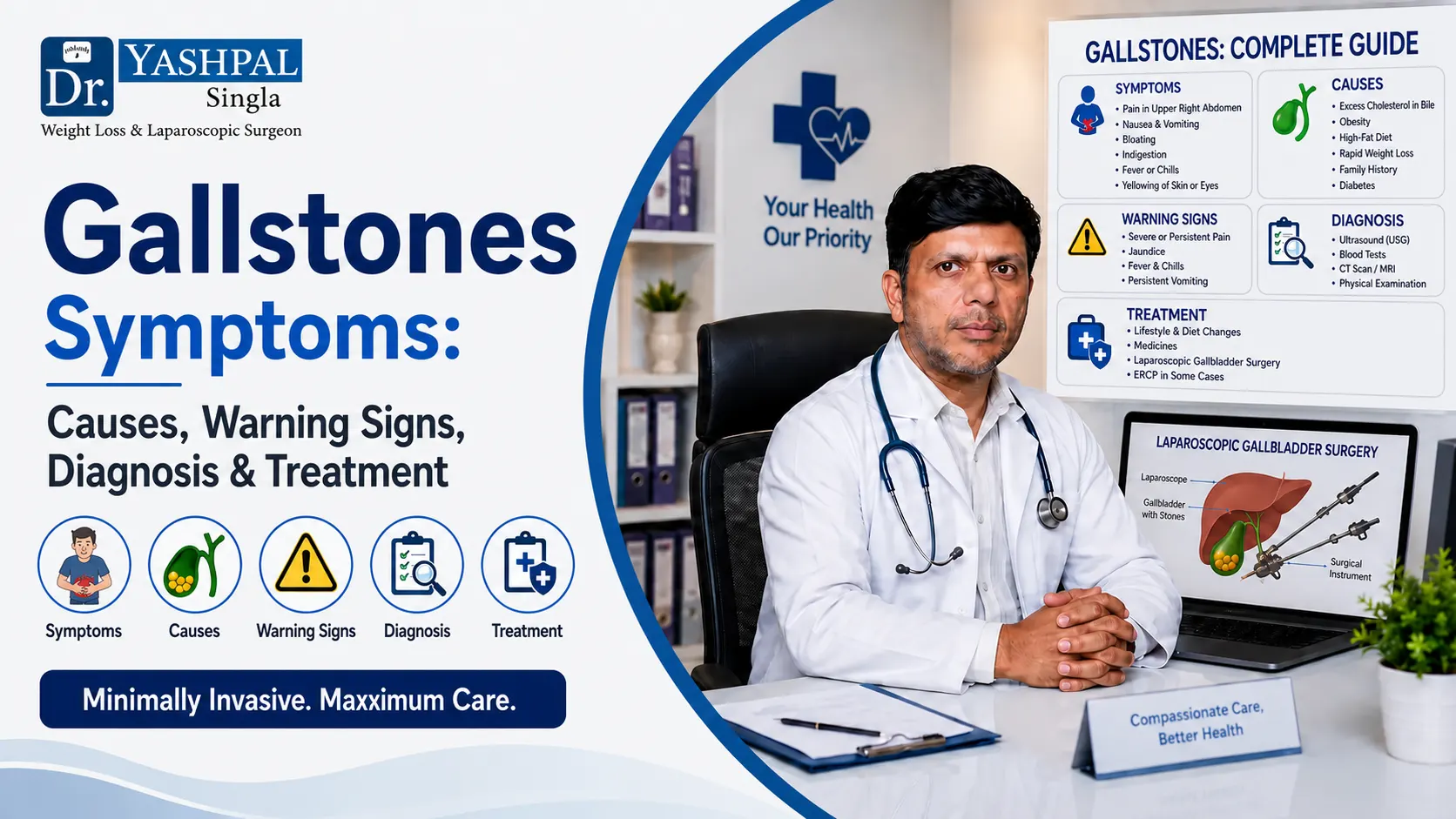
If you’re reading this at night because something under your right ribs won’t let you sleep, take a breath. Most gallstones symptoms show up as a sharp, gripping pain in the upper right belly, often after a heavy or oily meal, sometimes with nausea or pain spreading to your back and right shoulder. Gallstones are hardened deposits that form in the gallbladder, and while many people carry them quietly for years, some develop pain that becomes hard to ignore. The good news? Once diagnosed, they’re very treatable usually with a simple, minimally invasive surgery.
Let’s slow down and go through all of it. What gallstones actually are, which signs matter, when it becomes an emergency, and how treatment works. No jargon dumps. Just honest, useful information.
What Are Gallstones? A Quick Overview
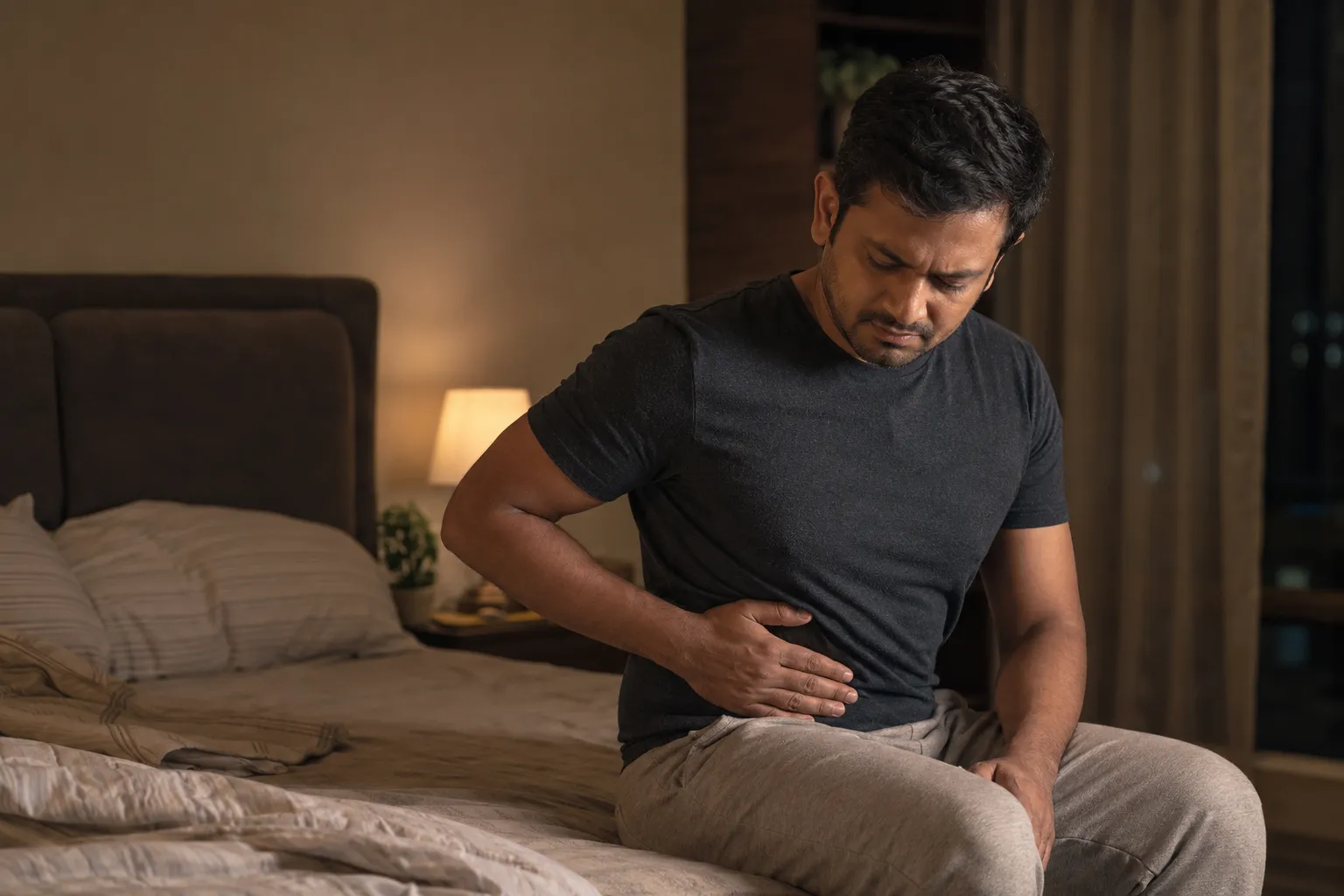
Your gallbladder is a small, pear-shaped organ tucked under your liver. Its job is quiet but important it stores bile, the fluid your body uses to break down fat.
Sometimes the chemistry of that bile goes off balance. Too much cholesterol, too much bilirubin, or bile that just sits too long. When that happens, tiny crystals form and slowly harden into stones. In medical terms, this is called cholelithiasis. Some stones stay as small as a grain of sand. Others grow to the size of a golf ball.
- Some people have one large stone
- Others have dozens of tiny ones
- Many never feel a thing
- And some end up in the ER at 2am
That’s the strange part about gallstones. They don’t follow a script. The problem usually starts when a stone shifts and blocks a duct; that’s when the body starts sending signals.
What Are the First Signs of Bad Gallstones?
This is the question most people search first, usually right after the first bad episode. And it makes sense you want to know if what you felt was the warning sign.
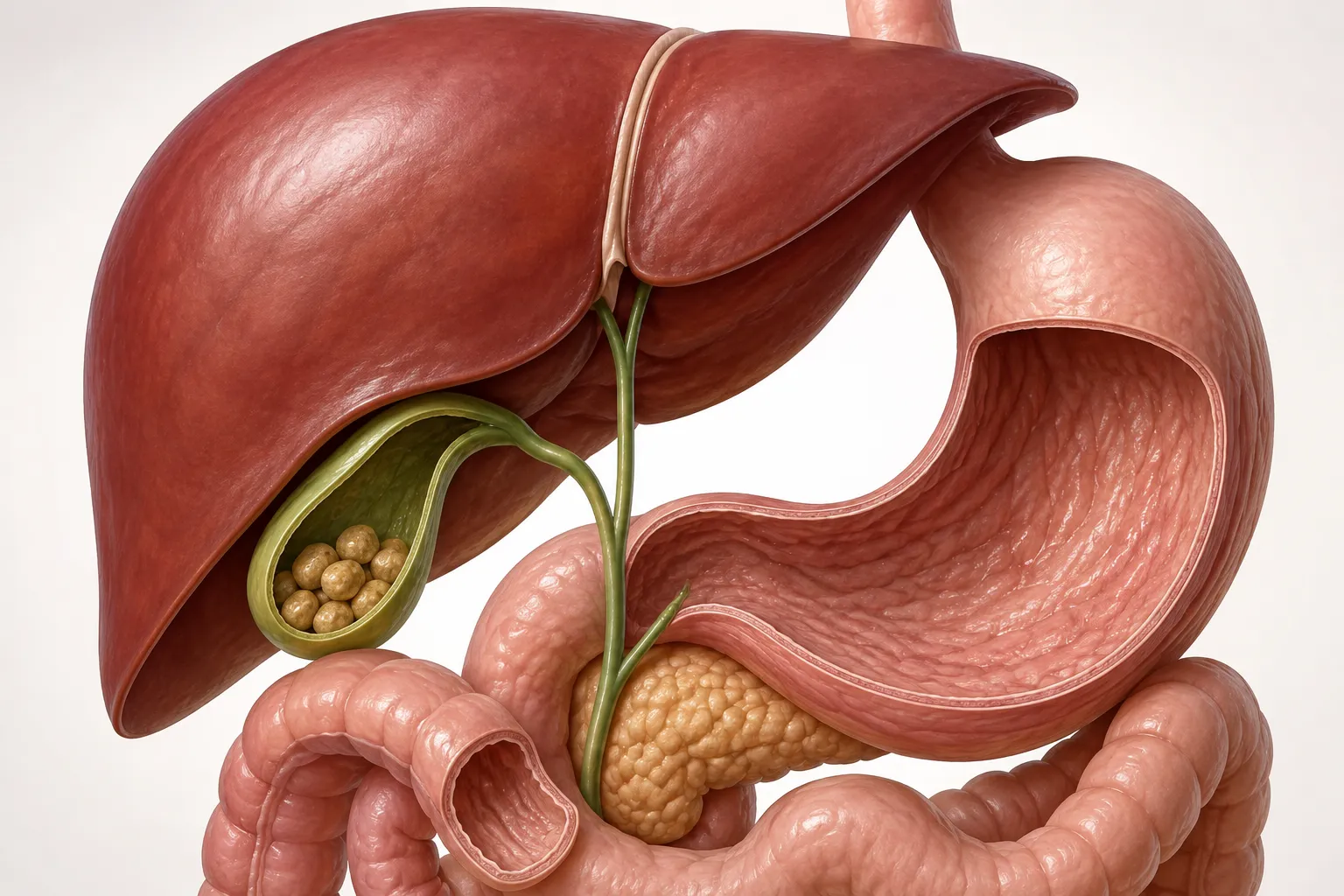
The earliest and most classic of all gallstones symptoms is a sudden, intense pain in the upper right side of your abdomen, just below the ribs. Doctors call this biliary colic. It often shows up an hour or two after eating something rich, like fried food, ghee-heavy dishes, or a late dinner.
Here’s what those first “bad” signs usually feel like:
- A gripping or squeezing pain, not a mild ache
- Pain that builds up, peaks, then slowly fades (often 30 minutes to a few hours)
- Discomfort that worsens after fatty or fried meals
- A feeling of fullness or pressure that antacids don’t fix
- Nausea creeping in alongside the pain
If these episodes keep coming back, that’s your body telling you the stones aren’t going anywhere on their own. Recurring pain is the line between “maybe it was something I ate” and “I should get this checked.” Please don’t wait for the third or fourth attack to take it seriously.
Complete List of Gallstones Symptoms
Not every case looks the same, but there’s a recognisable pattern. Here’s the full spread of gallstones symptoms, from the mild and easily dismissed to the ones that mean go to a hospital now.
Upper Right Abdominal Pain (Biliary Colic)
This is the headline symptom. A sudden, sharp, or cramping pain in the upper right abdomen sometimes in the centre, just below the breastbone. It’s often called a gallbladder attack, and it can be frightening the first time. The pain comes when a stone blocks the flow of bile, causing pressure to build inside the gallbladder. It can last anywhere from a few minutes to several hours, and it usually hits after meals or in the evening.
Pain Radiating to the Back or Shoulder
One of the most confusing things about gallbladder pain symptoms is where the pain travels. It doesn’t stay put. Many patients describe a dull, dragging ache that spreads to the right shoulder blade or the middle of the back. People sometimes mistake it for muscle pull or even heart trouble. If your “back pain” always seems to arrive after eating, the gallbladder is worth suspecting.
Nausea, Vomiting & Bloating After Meals
Your gallbladder helps digest fat. When it’s blocked or inflamed, digestion suffers. This shows up as:
- Nausea, especially after oily food
- Vomiting during a strong attack
- Bloating, belching, and a heavy feeling in the stomach
- Discomfort that keeps returning after specific meals
These symptoms are easy to blame on “gas” or “acidity” which is exactly why gallstones often go undiagnosed for months.
Jaundice (Yellowing of Skin & Eyes)
This one you should never ignore. When a stone slips out of the gallbladder and blocks the main bile duct, bile backs up into the bloodstream. The result is jaundice, a yellow tint in the whites of your eyes and skin. You might also notice dark urine and pale, clay-coloured stools. Jaundice means the blockage has moved to a more serious spot, and it needs prompt medical attention.
Fever & Chills (Sign of Infection)
Pain is one thing. Pain with fever is another. When a blocked gallbladder becomes infected or inflamed (a condition called cholecystitis), your body raises the alarm with fever, chills, and often a fast heartbeat. This is no longer a “wait and watch” situation. Fever alongside your other gallstones symptoms is a strong signal to reach a hospital quickly.
Silent Gallstones: When There Are No Symptoms at All
Here’s something that surprises a lot of people. You can have gallstones and feel absolutely nothing.
These are called silent stones, and they’re incredibly common. In fact, most people who have gallstones never develop symptoms at all. They’re often discovered by accident during an ultrasound done for something completely unrelated.
So the natural question: do silent stones need treatment?
Usually, no. If they’re not causing trouble, doctors often just keep an eye on them. But there are exceptions:
- Very large stones (which carry a higher risk of complications)
- Stones in people with diabetes
- A gallbladder wall that shows signs of calcification
- Situations where the risk of future problems is high
The important thing is that “silent” doesn’t always mean “safe forever.” Stones can stay quiet for years and then suddenly announce themselves. This is why, even with no pain, a proper evaluation is worth having so you and your doctor can decide together whether to watch or act.
What Food to Avoid With Gallstones?
If you already know you have stones, or you keep getting mild attacks, food is the first thing you can control today. Certain foods make the gallbladder work harder, and a harder-working gallbladder means a higher chance of a painful episode.
Try to limit or avoid:
- Deep-fried food samosas, pakoras, puris, anything swimming in oil
- Heavy ghee and butter-loaded curries
- Fatty red meat and processed meats
- Full-fat dairy cream, cheese, whole milk
- Fast food and packaged snacks high in trans fats
- Refined carbs and sugary desserts in large amounts
And what actually helps:
- High-fibre foods vegetables, fruits, whole grains, dals
- Lean proteins like chicken, fish, tofu, and pulses
- Plenty of water through the day
- Smaller, more frequent meals instead of one giant heavy one
A gentle rule of thumb: if a meal feels greasy going down, your gallbladder probably won’t enjoy it either. Managing food won’t dissolve existing stones, but it can genuinely reduce how often your gallstones symptoms flare up while you plan proper treatment.
When Gallstone Symptoms Become an Emergency
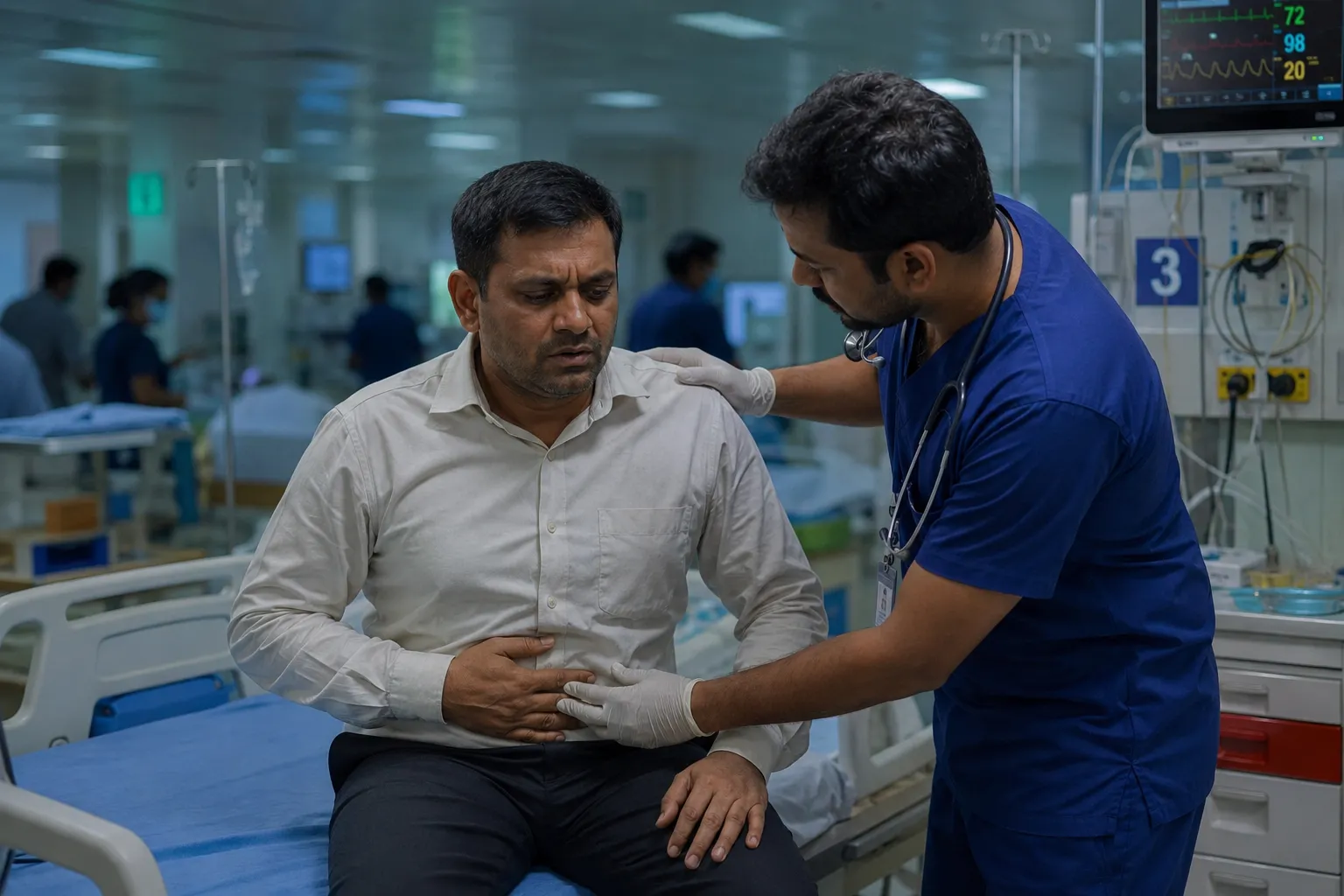
Most gallbladder pain, however awful it feels, isn’t immediately dangerous. But some situations are, and knowing the difference could matter a great deal.
Go to a hospital right away if you have:
- Severe abdominal pain that lasts more than a few hours and won’t settle
- Pain along with a high fever and chills
- Yellowing of the skin or eyes (jaundice)
- Persistent vomiting where you can’t keep anything down
- Pain so intense you can’t sit still or find any comfortable position
These signs can point to a blocked bile duct, an infected gallbladder, or in rarer cases, an inflamed pancreas all of which need urgent care. A gallbladder attack that keeps escalating instead of easing is not something to sleep off. When in doubt, get seen. It’s always better to be checked and reassured than to wait too long.
Diagnosis: How Gallstones Are Confirmed
The relief of a diagnosis is underrated. Once you know what’s going on, the fear of the unknown finally lifts. And confirming gallstones is usually straightforward.
The main tools doctors use:
- Ultrasound (USG): The first and most common test. Quick, painless, and highly accurate at spotting stones in the gallbladder.
- Blood tests: To check for infection, inflammation, and how well your liver is working.
- MRCP (MRI scan): A detailed scan used when a stone may have moved into the bile ducts.
- CT scan: Sometimes used to check for complications or rule out other causes.
- HIDA scan: Occasionally used to see how well your gallbladder is actually functioning.
For most patients, a simple ultrasound and a conversation about their symptoms is enough to reach a clear answer. From there, the path forward becomes much easier to plan.
Gallstone Symptom Treatment at Meyash Hospital, Hisar
Here’s the reassuring truth: gallstones are one of the most treatable surgical conditions there is.
When stones are causing repeated pain, infection, or blockage, the standard and most effective treatment is removing the gallbladder, a procedure called laparoscopic cholecystectomy. And no, you don’t need your gallbladder to live a normal, healthy life. Your body adjusts beautifully without it.
At Meyash Hospital, Hisar, this is handled through advanced, minimally invasive laparoscopic surgery, which means:
- Just a few tiny keyhole incisions instead of a large cut
- Far less pain after the procedure
- A shorter hospital stay often day-care or overnight
- Faster recovery, with most people back to routine within a week
- Minimal scarring
The whole approach is built around getting you comfortable, safe, and back to your life quickly. For patients dealing with ongoing gallstones symptoms, this kind of surgery often feels less like a big operation and more like finally closing a chapter of unpredictable pain.
Why Early Symptom Evaluation With Dr. Yashpal Singla Matters
Timing changes everything with gallstones. A stone that’s simply causing occasional pain is far easier to manage than one that’s already caused infection, jaundice, or pancreatitis.
This is exactly why an early evaluation with Dr. Yashpal Singla is so valuable. Getting your symptoms assessed early means the problem is caught while it’s still simply a planned, smooth surgery instead of an emergency one. His focus on minimally invasive techniques means patients are guided calmly through diagnosis, decision, and recovery, without unnecessary fear or delay. If your attacks are becoming a pattern, that first consultation is the single most useful step you can take.
Living With Gallstone Symptoms: Short-Term Relief Tips
While you’re arranging a proper check-up, there are things that can ease day-to-day life. These won’t cure anything please be clear on that but they can make the waiting period gentler.
- Eat light, low-fat meals and avoid your known trigger foods
- Keep meals smaller and more spaced out
- Stay well hydrated
- Use a warm compress on the upper abdomen during mild discomfort
- Don’t lie down flat right after eating
- Avoid crash diets and sudden weight loss, which can actually worsen stones
And one honest caution: over-the-counter painkillers might mask a serious attack. If your pain is severe, feverish, or comes with jaundice, skip the home remedies and get medical help. Relief tips are for the mild days. The bad days need a doctor.
Conclusion
Gallstones can feel scary, especially during that first frightening attack in the middle of the night. But this is a condition doctors understand well, diagnose easily, and treat successfully every single day. The key is simply not ignoring the signals your body keeps sending.
If your gallstones symptoms keep returning, treat that as your cue not to panic, but to act. Early care almost always means simpler treatment and an easier recovery.
Ready To Get Treated?
If gallstone pain keeps disrupting your days and nights, don’t wait for the next attack. Dr. Yashpal Singla at Meyash Hospital, Hisar offers advanced, minimally invasive laparoscopic gallbladder surgery for a faster, safer recovery. Book your consultation today.
FAQs
Q: What is the main treatment for gallstones symptoms?
The main treatment for gallstones symptoms is laparoscopic gallbladder removal (cholecystectomy), a minimally invasive keyhole surgery. It’s safe, effective, and lets most patients return to normal life within a week.
Q: What is the first stage of gallstones symptoms?
The first stage is usually the formation of tiny cholesterol or pigment crystals in the bile, which slowly harden into stones. At this early stage there’s often no pain at all, and stones are only found by chance on an ultrasound.
Q: Can gallstone symptoms come and go?
Yes, very often. Gallstone pain frequently arrives in episodes flaring after fatty meals, then easing for days or weeks. This on-and-off pattern is common, but recurring attacks still mean you should get evaluated.
Q: Are gallstone symptoms worse at night?
Many patients do notice attacks in the evening or at night, often after a heavy dinner. Lying down and slower nighttime digestion can make the pain feel more intense, which is why gallbladder attacks so often disturb sleep.
Q: Can gallstones symptoms cause back pain without abdominal pain?
Yes, sometimes. Pain can radiate to the right shoulder blade or upper back, and in some cases the back discomfort is more noticeable than the belly pain. If back pain regularly follows meals, gallstones are worth ruling out.
Q: Is gallstones symptoms treatment covered under cashless insurance at Meyash Hospital?
Gallbladder surgery is commonly covered under most health insurance plans, and cashless facilities are available depending on your insurer. It’s best to confirm your specific policy details directly with the Meyash Hospital, Hisar team before admission.
This article has been reviewed by the medical team at Meyash Hospital, Hisar. For personalized advice, consult Dr. Yashpal Singla or our specialists directly.