

It’s usually midnight when people actually start reading about this. The doctor mentioned “laparoscopic surgery” in a five-minute consultation, handed over a printout, and now you’re here trying to figure out what it actually means before you can sleep.
Maybe there’s a scan report open in another tab. Maybe someone in the family had “the old kind” of surgery years ago, and that memory is worrying me a lot right now.
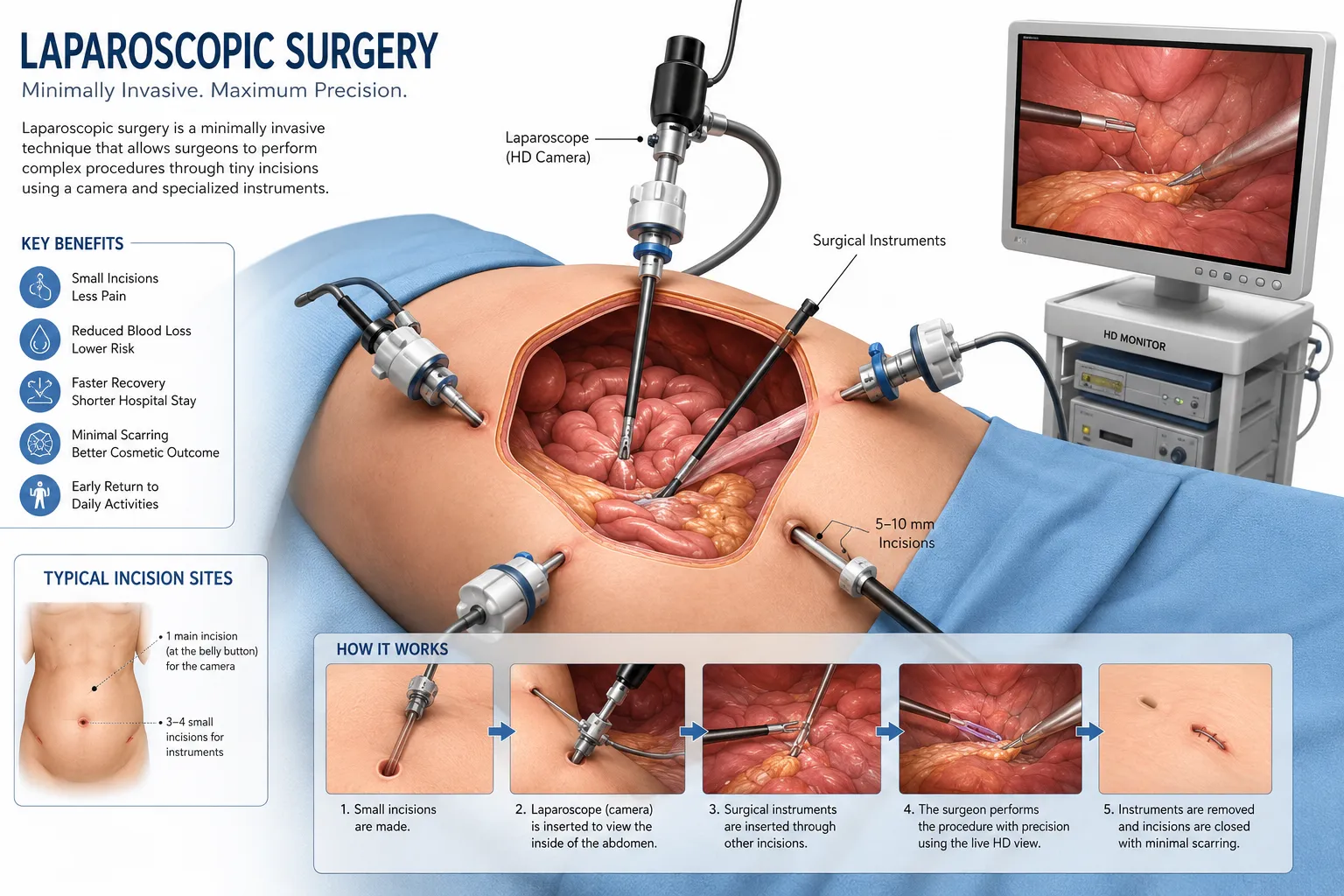
Here’s the direct answer. Laparoscopic surgery is a way of operating through a few small cuts instead of one large one. A thin tube with a camera called a laparoscope goes in through a half-inch incision near the belly button, and the surgeon works using that camera feed on a screen instead of looking directly into an open wound.
Smaller cuts. Less trauma to the body. Usually a much shorter stay in the hospital than what your parents’ generation went through for the same operation.
It’s used for everything from gallbladder removal to hernia repair to weight-loss procedures, and it’s become the default approach for a long list of operations that used to mean weeks of recovery.
Not because it’s trendy because the outcomes are genuinely better for most patients, most of the time. And once you understand what’s actually happening during the procedure, it tends to become a lot less frightening than it sounds on paper.
What Is Laparoscopic Surgery?
Think of it this way instead of one big window into your body, surgeons use a few tiny ones. That’s really the whole idea behind this technique, and it’s why some people still call it “keyhole surgery.” The name isn’t marketing. It’s a fairly literal description of what the incisions look like.
This approach has been around in some form since the late 1980s, when the first laparoscopic gallbladder removal quietly changed general surgery for good.
What started as a fairly experimental technique for a handful of procedures has, over the following decades, become the standard way to perform dozens of operations across general surgery, gynecology, urology, and bariatric surgery.
How Laparoscopic (Keyhole) Surgery Differs From Open Surgery
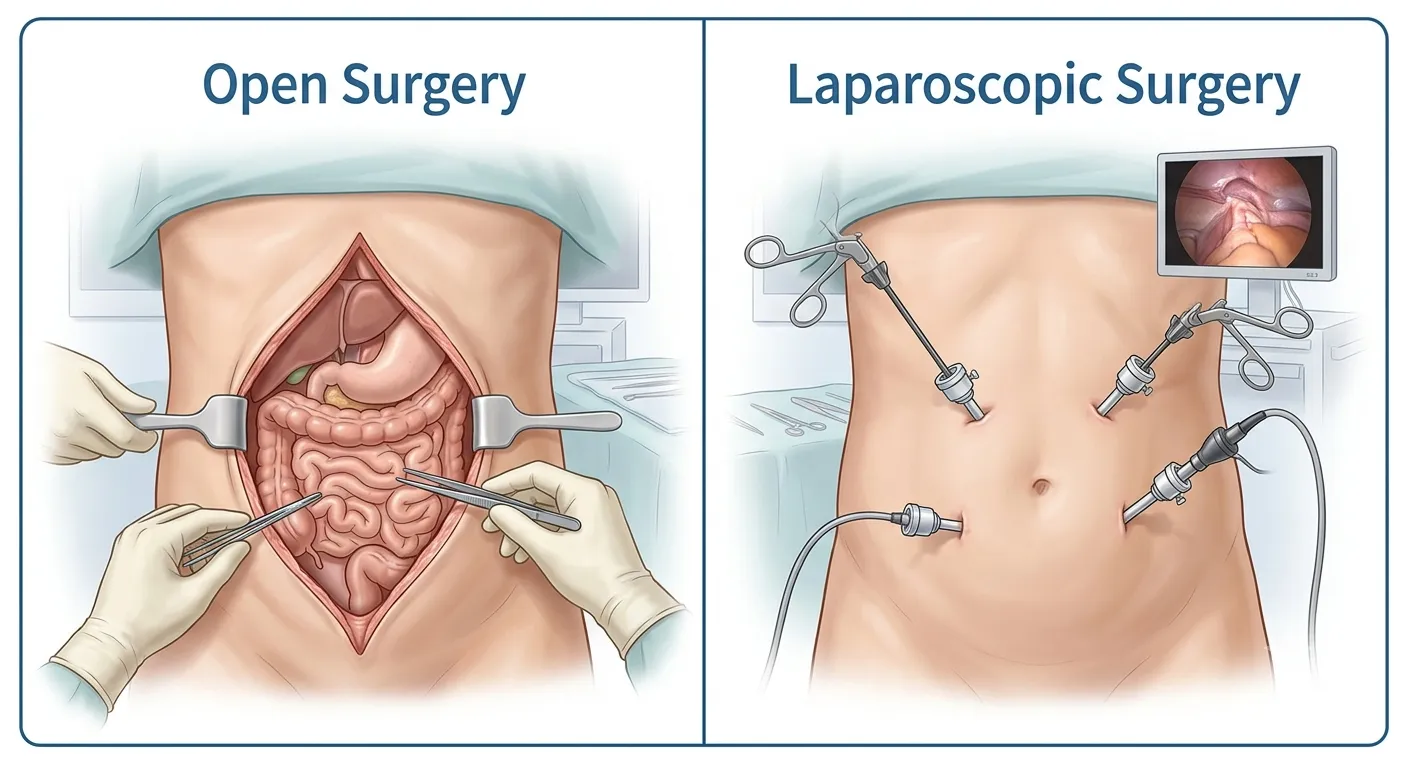
Open surgery means one long incision, sometimes several inches, so the surgeon can see and reach the area directly with their hands. It works, and for very complex or large-scale problems certain cancers, major trauma, and some advanced cases it’s sometimes still the better choice.
But it also means more cutting through muscle and tissue, more bleeding, a higher infection risk, and a longer road back to normal.
Keyhole surgery skips most of that. Instead of one big opening, the surgeon makes three or four incisions, each under an inch. Through these, they insert both the camera and long, thin surgical instruments, operating with the same precision as open surgery but through a fraction of the entry point.
The Laparoscope: How Surgeons See Inside Without a Large Cut
The laparoscope itself is a simple idea, really a thin rod, a light, a tiny camera. Before it goes in, the surgeon fills the belly with carbon dioxide gas, which pushes the organs slightly apart so there’s actual room to see and work.
Then the camera sends a magnified, real-time image to a monitor in the operating room, and the surgeon operates by watching that screen rather than looking down directly.
That magnification is actually a quiet advantage most people don’t think about. A surgeon watching a screen sees the surgical field enlarged several times over, often with better clarity than the naked eye would give them in open surgery.
Combined with instruments built specifically for these small incisions, it allows for a level of precision that, counterintuitively, can be even finer than working through a large open wound.
Is Laparoscopic Surgery a Major Surgery? Laparoscopic vs Open Surgery Explained
This is probably the question people search at 1am more than any other, and the honest answer is: yes, often it still is.
“Minimally invasive” describes the technique, not the seriousness of what’s being fixed. A gallbladder removal, a hernia repair, a weight-loss procedure these are real operations that involve general anesthesia, real risk, and real recovery time, even when they’re done through small cuts.
What changes with laparoscopic surgery isn’t the significance of the operation. It’s how much the body has to go through to get there.
That distinction matters, because some patients walk in assuming keyhole surgery is basically minor, almost like a dental procedure and then feel caught off guard by needing a day or two of real rest afterward.
Others assume the opposite: that any surgery involving anesthesia must mean a long, difficult recovery, the way it did for someone in their family years ago.
Neither assumption is quite right. The truth sits in between. Compared with open surgery for the same condition, laparoscopic surgery usually means less pain, a shorter hospital stay, and a faster return to your normal life but it’s still surgery, and it still deserves to be taken seriously, prepared properly, and recovered from without rushing.
10 Common Procedures Performed Using Laparoscopic Surgery
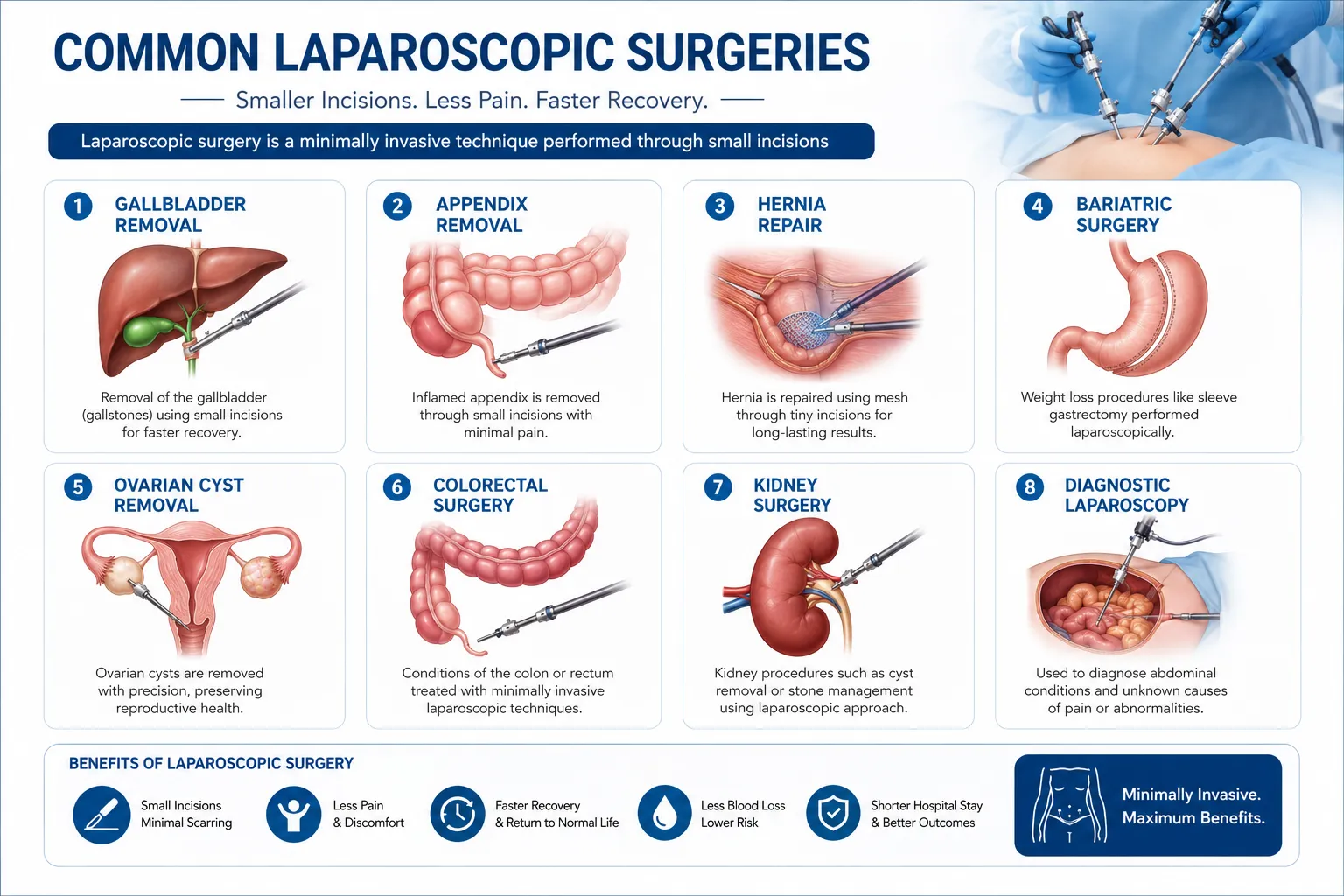
1. Gallbladder Removal (Cholecystectomy)
Probably the most common laparoscopic procedure worldwide, and often the one people are most surprised by afterward. When gallstones cause repeated pain or inflammation, removing the gallbladder through three or four small incisions is now the standard approach, replacing what used to be a large open incision and a week-long hospital stay.
Most patients go home within 24 hours and are back to normal eating within a few weeks.
2. Appendix Removal (Appendectomy)
An inflamed appendix needs to come out, often urgently, and there usually isn’t much time to weigh options. Laparoscopic appendectomy usually means going home within a day or two, instead of the week-long stays that open appendix surgery once required, and the smaller incisions mean far less post-operative pain during what’s already a stressful, sudden situation.
3. Hernia Repair
Inguinal, umbilical, incisional most hernia types can be repaired laparoscopically, often with mesh reinforcement placed through the same small incisions to reduce the chance of the hernia returning.
This approach is particularly useful for hernias on both sides of the body, since a surgeon can often address both through the same small set of incisions in one sitting.
4. Bariatric and Weight-Loss Surgery
Sleeve gastrectomy and gastric bypass are almost always performed laparoscopically now. Given how much these procedures reshape the stomach and digestive tract, doing it through small incisions makes a real difference to how quickly patients get back on their feet and for a population where obesity itself already raises surgical risk,
minimizing additional trauma to the body matters even more than usual.
5. Acid Reflux Surgery (Fundoplication)
For severe, long-term acid reflux that medication just isn’t controlling anymore, a laparoscopic fundoplication wraps part of the stomach around the lower esophagus to stop acid from creeping back up. It’s usually considered only after lifestyle changes and medication haven’t given lasting relief,
but for the right patient, it can mean coming off reflux medication entirely.
6. Ovarian Cyst and Fibroid Removal
Many gynecological growths, cysts, fibroids, and some early-stage conditions can be removed laparoscopically, sparing patients the longer recovery of open abdominal surgery. For women hoping to preserve fertility, this precision matters; laparoscopic techniques allow surgeons to remove the growth while leaving surrounding reproductive tissue largely undisturbed.
7. Ectopic Pregnancy Treatment
When a pregnancy develops outside the uterus, it’s a medical emergency, and laparoscopic surgery is often used to remove it safely, usually with a much faster recovery than an open procedure would allow, which matters enormously for a patient who is already going through something emotionally difficult.
8. Kidney and Urological Procedures
Certain kidney stone treatments, some prostate procedures, and various urological surgeries are performed laparoscopically or with robotic-assisted variations of the same keyhole technique. Removing a kidney, treating certain urinary tract conditions, or correcting structural issues can now often be done without the large flank incision that open urological surgery traditionally required.
9. Colorectal Surgery
Sections of the colon or rectum affected by disease can, in many cases, be removed and reconnected laparoscopically rather than through a large abdominal incision. This is one of the more technically demanding applications of the technique, and it’s usually reserved for surgeons with specific experience in colorectal procedures.
10. Diagnostic Laparoscopy
Sometimes the goal isn’t to fix something yet it’s to look. When scans and blood tests can’t explain persistent abdominal or pelvic pain, a diagnostic laparoscopy lets a surgeon see directly what’s going on, and often treat it in the same sitting rather than requiring a second procedure later.
Benefits of Laparoscopic Surgery Over Traditional Open Surgery
None of these benefits are marketing claims; they’re the actual reason this technique has replaced open surgery for so many procedures over the past three decades.
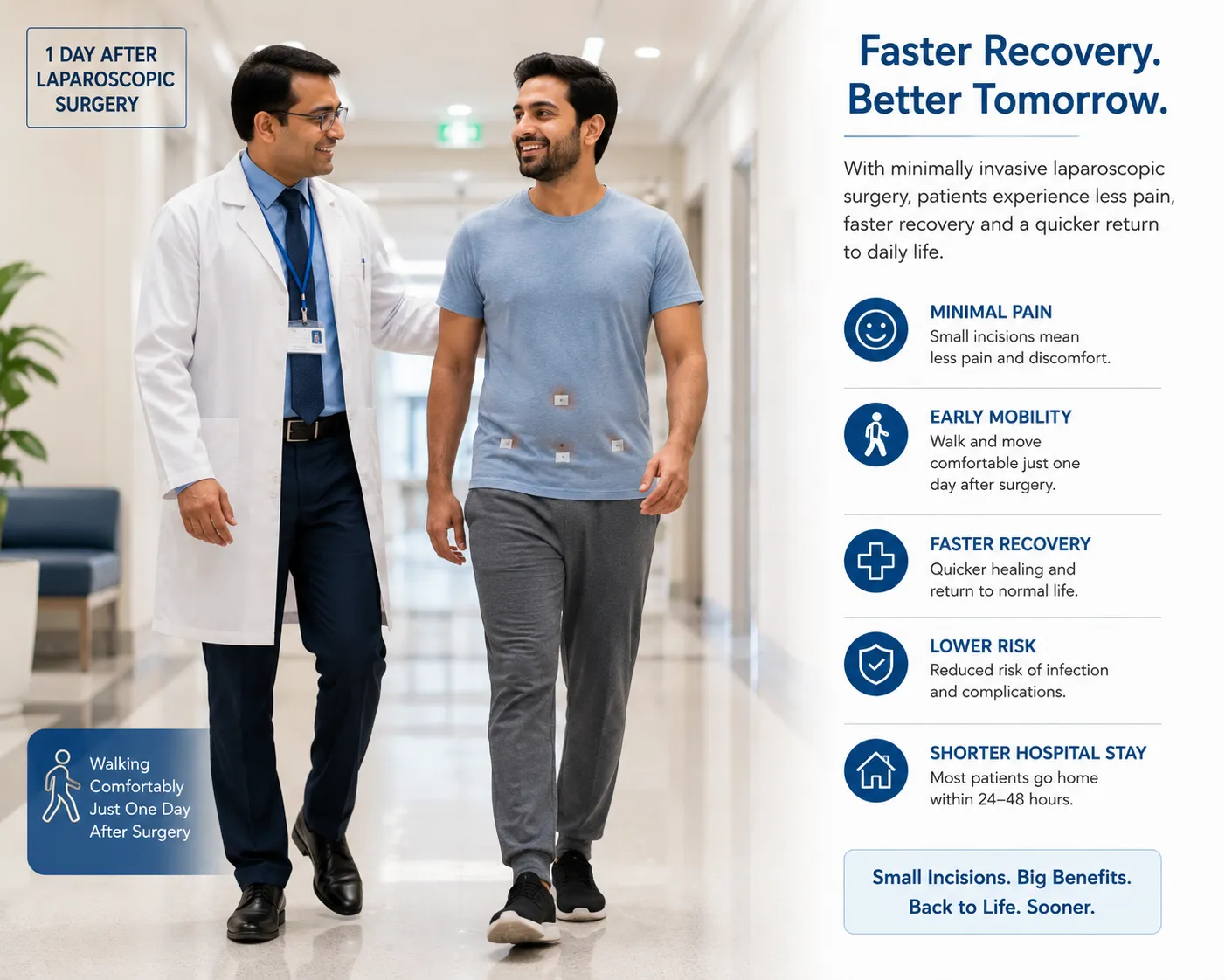
Smaller Incisions, Smaller Scars
Three or four cuts under an inch each, instead of one long incision. For most people, the cosmetic difference alone is significant but it’s really a marker of something bigger happening underneath. Less cutting through skin and muscle means the body simply has less to heal from.
Less Blood Loss and Lower Infection Risk
Smaller openings mean less exposed tissue, which generally means less bleeding during the procedure and a lower chance of infection afterward. For patients on blood thinners or with other bleeding-risk conditions, this difference can be a genuinely important factor in which approach a surgeon recommends.
Shorter Hospital Stay
Many laparoscopic procedures are done as day-care surgery or involve just one overnight stay, compared to several days for the equivalent open surgery. For working patients and for families managing the practical side of a hospital stay, this alone often makes a real difference.
Faster Return to Daily Life
Less trauma to the abdominal wall generally translates into less pain, less need for strong painkillers, and a quicker path back to walking, working, and everyday movement often measured in days rather than the weeks that open surgery recovery can involve.
How Painful Is Laparoscopic Surgery? What to Expect After the Procedure
Nobody wants a vague answer to this one at midnight, so here’s a direct one: there will be some discomfort, but for most people it’s manageable, and it fades faster than they expect.
Right after laparoscopic surgery, while the anesthesia is still wearing off, you likely won’t feel much of anything. Once it fades, the more common complaints aren’t dramatic soreness around the incision sites, some bloating from the gas used during the procedure, and occasionally a strange ache in the shoulder.
That shoulder pain catches people off guard every time, but it’s harmless; it’s just leftover gas pressing gently on a nerve that happens to run up toward the shoulder.
Your surgical team will manage this with pain medication in the first few days, and for most patients, over-the-counter options are enough within a week. A rough pattern many patients notice: the first 24 to 48 hours are the most uncomfortable, day three or four brings a noticeable improvement, and by the end of the first week,
most of the soreness has faded into the background rather than dominating the day. Compare that to open surgery, where a large incision through abdominal muscle tends to mean a longer, more intense stretch of post-operative pain and the difference in comfort is usually one of the things patients notice first, often within the first day itself.
How to Prepare for Laparoscopic Surgery
Fasting and Medication Instructions
Your surgeon will typically ask you to stop eating and drinking, including water, from around midnight before the procedure. Certain medications, particularly blood thinners, may need to be paused in advance, so it’s worth going through your full medication list with your care team well before the surgery date.
What to Wear and Bring on Surgery Day
Loose, comfortable clothing helps, since there will be some tenderness around the abdomen afterward. Leave jewelry at home except a wedding ring, skip the nail polish (your oxygen levels are monitored through your fingertip during surgery, and polish can interfere with the reading), and arrange for someone to drive you home you won’t be in a state to do that yourself.
The Night Before and Morning of Surgery
Keep it simple. Eat an early, light dinner if you’ve been told when your fasting window begins, lay out your clothes and bag the night before so the morning isn’t rushed, and try to get proper sleep rather than staying up worrying, easier said than done, but worth attempting.
Arrive at the hospital with enough time for the pre-operative checks, and bring a list of your current medications along with any recent test reports your surgeon has asked for.
What Happens During Laparoscopic Surgery (Step by Step)
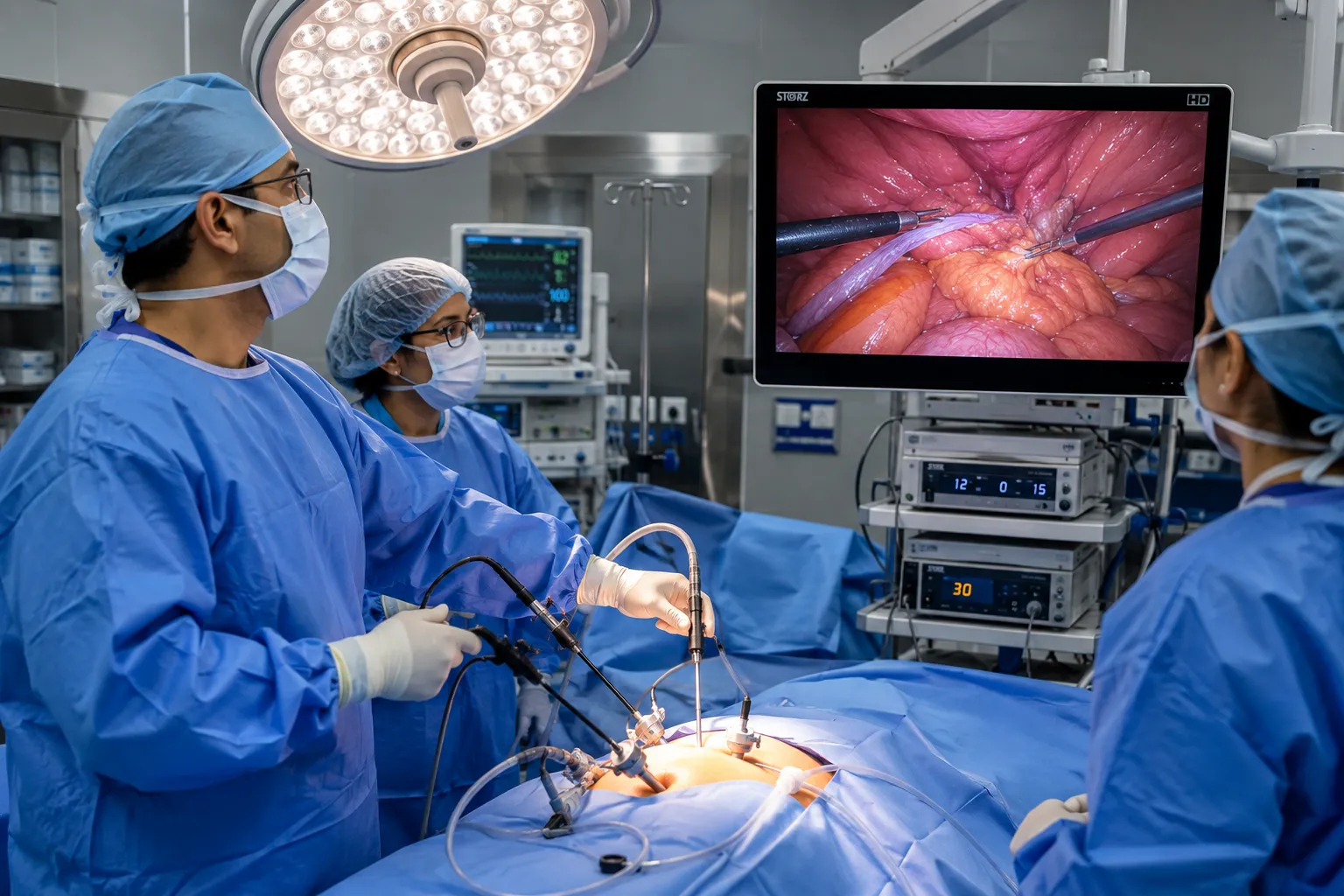
You’ll be given general anesthesia, so you’re fully asleep and feel nothing throughout, with an anesthesiologist monitoring your vitals heart rate, oxygen levels, and blood pressure continuously for the entire operation. The surgeon then makes a small incision, usually near the belly button, and inflates the abdomen gently with carbon dioxide gas to create working space.
The laparoscope goes in first, followed by the surgical instruments through the remaining small incisions.
From there, the surgeon works while watching the magnified image on the monitor removing, repairing, or reconstructing whatever the procedure calls for. Once it’s done, the gas is released, the instruments come out, and the incisions are closed, usually with just a stitch or two, or surgical glue.
Most procedures take somewhere between one and three hours, depending on complexity a straightforward gallbladder removal often finishes closer to the one-hour mark, while a more involved hernia repair or bariatric procedure can run longer.
You’re then moved to a recovery room, where the team watches you closely as the anesthesia wears off, before you’re either discharged the same day or moved to a hospital room for observation.
When Should You See a Surgeon?
If you’ve been dealing with unexplained abdominal pain, a hernia that’s growing or becoming painful, gallstone attacks that keep recurring, persistent acid reflux that medication isn’t controlling, or any condition where your doctor has already mentioned surgery as an option that’s the point to actually sit down with a surgeon rather than keep researching alone.
Waiting rarely makes these conditions simpler to treat, and for some a strangulated hernia, an inflamed appendix, an infected gallbladder delay can turn a straightforward planned surgery into an urgent one.
Diagnosis Before Surgery
Before recommending surgery, your doctor will usually want a clear picture of what’s actually going on an ultrasound to spot gallstones or cysts, a CT scan for a more detailed look at internal organs, blood work to check for infection or inflammation, or in some cases an endoscopy, depending on the suspected condition.
Basic pre-surgical fitness tests also come into play: blood pressure, ECG, routine blood counts mainly to confirm you’re a safe candidate for general anesthesia before a date is finalized.
Laparoscopic Surgery Treatment at Meyash Hospital, Hisar
At Meyash Hospital, laparoscopic surgery isn’t a side offering, it’s one of the areas the hospital has genuinely built its reputation around. As a multi-speciality hospital with 24×7 emergency support, the operating theatres are set up specifically for minimally invasive procedures,
with the imaging and instrumentation that keyhole surgery depends on, backed by an experienced surgical team that handles these cases regularly rather than occasionally.
Why Dr. Yashpal Singla’s Approach Is Different
Dr. Yashpal Singla has personally performed over 25,000 laparoscopic surgeries, alongside 3,000+ bariatric procedures, treating more than 100,000 patients across his career including time as Former HOD & Senior Consultant at Jindal Hospital, Hisar.
That kind of repetition matters in surgery in a way it’s hard to fully explain until you’ve needed it yourself; the surgeons who’ve simply done a procedure more times tend to handle the unexpected moments better, because they’ve usually already seen a version of it before.
Every consultation happens with him directly, not a rotating cast of juniors, and the plan he gives you is built around your specific case rather than a generic protocol. Patients from Hisar and from nearby towns across Haryana Hansi, Barwala, Adampur, and further out travel specifically for this combination of specialist experience and a genuinely unhurried consultation.
Cost of Laparoscopic Surgery in Hisar and Nearby Haryana
Cost is usually one of the first practical worries once the medical questions settle down, and it’s a fair one. Costs vary quite a bit depending on the exact procedure, the complexity of the case, the length of hospital stay required, and whether any complications arise: a straightforward gallbladder removal and a complex hernia repair simply aren’t priced the same way, and neither is a one-day stay compared to a longer one.
What helps most patients around Hisar, Hansi, Barwala, and nearby parts of Haryana is that Meyash Hospital is empanelled with a wide network of insurers and TPAs including Star Health, Care Health, Niva Bupa, HDFC ERGO, and the Haryana Government and Ayushman Bharat panels so cashless treatment is available for eligible patients.
The billing team will walk you through your specific insurance coverage before the surgery date, so there are no surprises waiting at discharge, and they can also guide you through flexible payment options if you’re paying out of pocket.
Recovery and Aftercare After Laparoscopic Surgery

Week 1: Rest and Wound Care
Plan on taking it easy for the first couple of days walking around the house is good, actually encouraged, but nothing strenuous. Keep the incisions clean and dry, follow the specific bathing instructions your surgeon gives you,
and don’t be alarmed if healing looks a little different than you imagined; small incisions heal quickly, but they still need basic care.
Returning to Work and Exercise
Most people return to a desk job within three to five days. Physically demanding work or a full exercise routine usually needs one to two weeks, sometimes longer depending on the procedure. Your surgeon will give you a timeline specific to your case.
This is genuinely one area where following their advice, rather than a generic online timeline, actually matters. Pushing too early, even when you’re feeling fine, is one of the more common causes of complications during recovery.
Diet After Laparoscopic Surgery
For most procedures, you can return to a normal diet fairly quickly, though your surgeon may recommend starting with lighter, easily digestible food for the first day or two soups, khichdi, curd rice, that sort of thing before working back to your usual meals.
Staying well hydrated helps with recovery generally, and if the surgery involves your digestive system specifically, like a gallbladder removal or bariatric procedure, you’ll get more detailed diet instructions tailored to that particular operation.
Risks and Possible Complications
Laparoscopic surgery carries fewer risks than open surgery, but “fewer” doesn’t mean “none,” and it’s worth knowing what to watch for. Possible complications include infection at the incision site, bleeding, injury to nearby organs or blood vessels (rare, but real), and reactions to anesthesia.
Blood clots are a rare but serious risk that your care team monitors for closely, particularly in the days right after surgery.
None of this is meant to alarm you, serious complications are genuinely uncommon, and an experienced surgical team knows exactly what to watch for during and after the procedure. But being able to recognize the warning signs yourself is part of a safe recovery.
Call your doctor immediately if you notice fever, spreading redness or swelling around an incision, unusual discharge, or worsening pain instead of gradual improvement.
Conclusion
Reading about surgery at midnight and actually going through it are two very different things. The second one is almost always less frightening than the anticipation. Laparoscopic surgery has changed what recovery looks like for procedures that used to mean weeks of downtime,
and for most patients, it’s a genuinely reassuring option once the practical questions get answered.
If you’re dealing with a condition that may need surgery, don’t wait for it to get worse. The team at Meyash Hospital, Hisar offers advanced laparoscopic surgery with over 25,000 procedures of experience behind it. Book your consultation today.
FAQs
Q1: Is laparoscopic surgery a major surgery?
Yes, in most cases it’s still a real surgical procedure under general anesthesia, just performed through small incisions instead of one large cut, which usually means an easier recovery.
Q2: How much bed rest is required after a laparoscopy?
Most people need just one to two days of proper rest at home before gradually returning to light activity. Full recovery timelines depend on the specific procedure performed.
Q3: How many incisions does laparoscopic surgery need?
Typically three to four small cuts, each under an inch long one for the camera and the rest for surgical instruments.
Q4: Is laparoscopic surgery safe for elderly patients?
Generally, yes, and often safer than open surgery for older patients, since it involves less blood loss and a shorter recovery. Your surgeon will assess overall fitness for anesthesia beforehand.
Q5: Will I have visible scars after laparoscopic surgery?
You’ll have small marks where the incisions were made, but they’re usually far less noticeable than open-surgery scars and fade significantly over several months.
Q6: Is laparoscopic surgery covered under cashless insurance at Meyash Hospital?
Yes, Meyash Hospital is empanelled with major insurers and TPAs, including Star Health, Care Health, Niva Bupa, and the Haryana Government panel, so cashless treatment is available for eligible patients.
This article has been reviewed by the medical team at Meyash Hospital, Hisar. For personalized advice, consult Dr. Yashpal Singla or our specialists directly.