

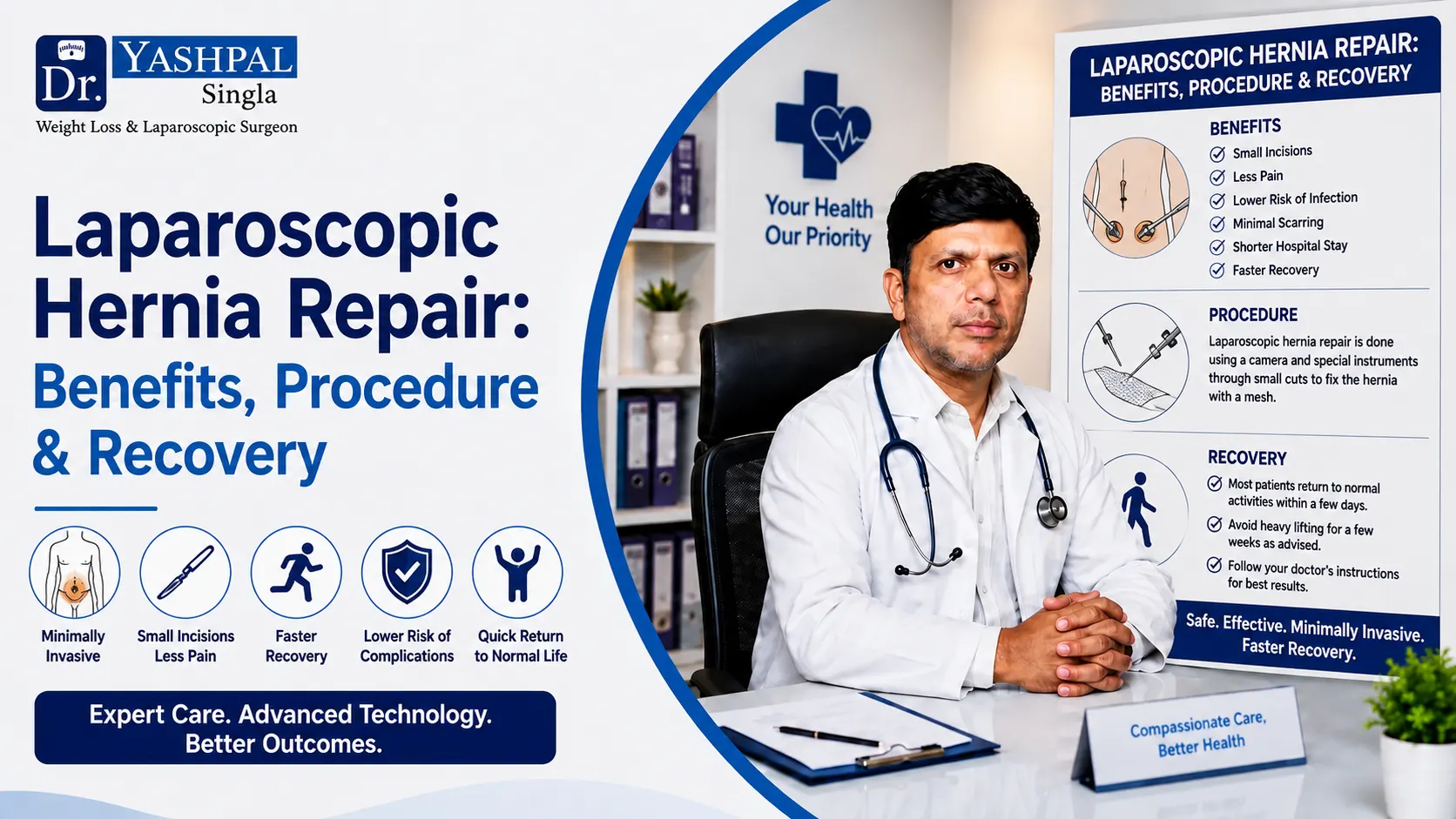
Somewhere between the diagnosis and the surgery date, most people start Googling one thing at 1am will this actually fix it, and how bad is the recovery going to be.
Laparoscopic hernia repair is a keyhole surgical technique that closes the muscle wall gap using a few small incisions instead of one large cut, typically reinforced with surgical mesh for a durable, lasting result. Compared to open repair, it usually means less pain, a faster recovery, and a noticeably lower chance of the hernia coming back.
Let’s go through exactly how it works, why it’s often the preferred choice, and what recovery genuinely looks like once the surgery is behind you.
What Is Laparoscopic Hernia Repair?
In this approach, the surgeon makes a few small incisions, usually around the abdomen, and works through them using a thin camera (laparoscope) and long, specialised instruments.
Instead of directly cutting into the hernia site from the outside, the repair is done from inside the abdominal cavity, pushing the protruding tissue back into place and reinforcing the weak spot with mesh.
This technique has become the preferred method for many hernia types, particularly inguinal, bilateral, and recurrent hernias, because it allows the surgeon to see and reinforce the entire area with remarkable precision, all through openings smaller than a fingertip.
What Is the Success Rate of Laparoscopic Hernia Surgery?
This is genuinely one of the most reassuring parts of this conversation. Laparoscopic hernia repair carries a high success rate, generally comparable to or better than open surgery, particularly when it comes to recurrence.
- Success rates for laparoscopic repair are typically well above 90% in experienced hands
- Recurrence rates are generally lower than open repair, especially for inguinal and bilateral hernias
- Complication rates remain low, and most patients return to normal activity without lasting issues
Success here isn’t just about the hernia not coming back it also factors in a smoother recovery, less chronic post-surgical pain, and a faster return to daily life. On nearly every one of those measures, the laparoscopic approach performs consistently well.
How Laparoscopic Hernia Repair Is Performed
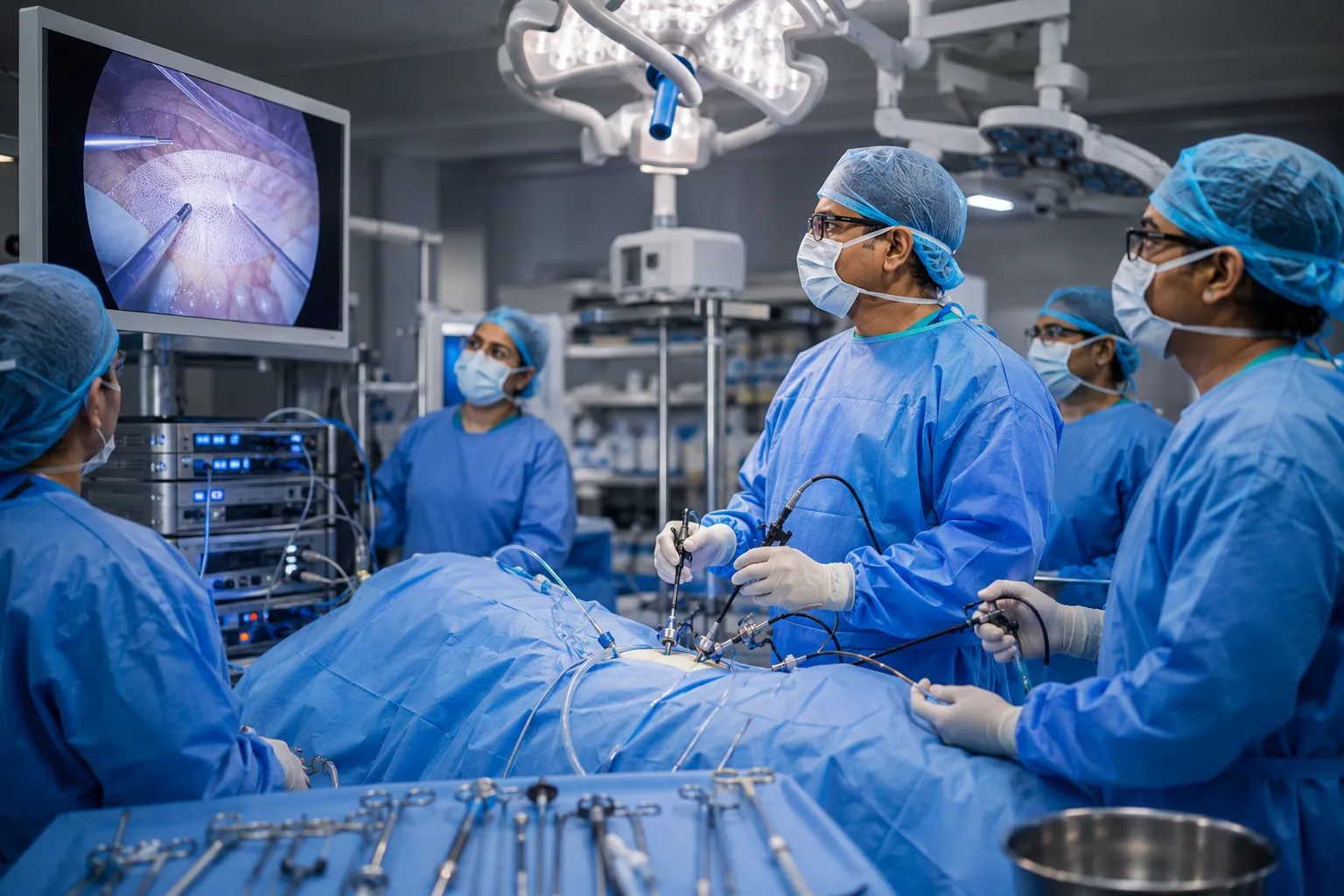
Here’s a clear walkthrough of the actual procedure, step by step:
- Anaesthesia General anaesthesia is given, so you’re fully asleep throughout.
- Small incisions Typically 3 small cuts, each less than half an inch, are made in the abdomen.
- Creating working space Carbon dioxide gas gently inflates the abdominal cavity, giving the surgeon room to work and see clearly.
- Camera and instruments inserted A laparoscope projects a magnified view onto a screen, while specialised instruments are used through the other incisions.
- Repositioning tissue The protruding tissue is carefully pushed back into its normal position.
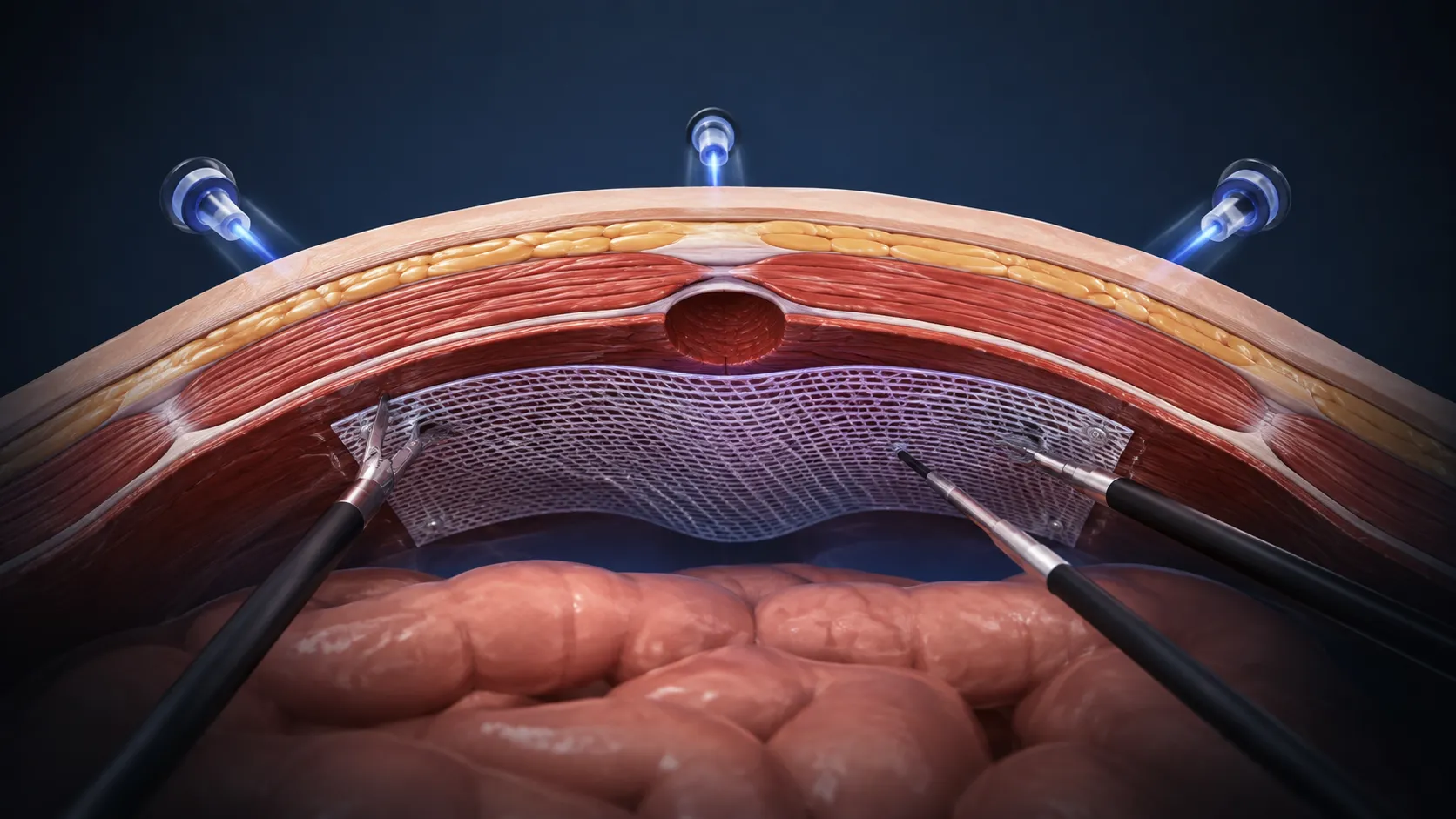
- Mesh placement A surgical mesh is positioned over the weak area to reinforce the muscle wall and prevent recurrence.
- Closing up Gas is released, and the small incisions are closed with stitches or surgical glue.
The entire procedure usually takes 30 to 90 minutes, depending on hernia size, type, and whether one or both sides are being repaired.
Mesh Placement Explained
Hernia mesh is a thin, flexible sheet, usually made of synthetic material, that acts like a scaffold over the weak spot in the muscle wall. Over time, your own tissue grows into and around this mesh, creating a strong, durable repair that’s genuinely less likely to fail than stitches alone.
Mesh has become the standard of care for most adult hernia repairs precisely because it significantly lowers recurrence rates compared to older, mesh-free techniques.
Benefits of Laparoscopic Over Open Hernia Repair
Open repair still has its place, but for most patients, laparoscopic surgery offers clear, measurable advantages.
Less Pain, Smaller Scars
Because the incisions are small and the muscle isn’t directly cut open the way it is in open surgery, patients typically experience noticeably less post-operative pain and a faster return to comfortable movement. The scars themselves are minimal and fade well over time.
Lower Recurrence Rate
Since the laparoscopic approach allows the surgeon to reinforce the entire weakened area with mesh from behind the muscle layer, hernia recurrence rates tend to be lower, particularly for inguinal hernias, compared to traditional open repair.
Ideal for Bilateral & Recurrent Hernias
If hernias exist on both sides, or if a previous repair has failed, laparoscopic technique allows both sides to often be repaired in a single operation, and it works particularly well for recurrent hernias, since the surgeon can approach the weak area from an angle unaffected by previous scar tissue.
How Long Is Recovery After Laparoscopic Hernia Repair?

Recovery timelines vary a little by individual, but here’s a realistic general picture.
- Day 1–2: Rest at home, gentle walking, mild soreness at incision sites
- First week: Light activity, avoiding any heavy lifting or straining
- Week 2: Most patients return to desk jobs and light routine
- Weeks 3–4: Gradual return to more physical activity and exercise
- Week 6: Most patients are cleared for heavier lifting and strenuous activity
Compared to open repair, which often needs 4–6 weeks before returning to more physical work, laparoscopic patients frequently find themselves back to a fuller routine noticeably sooner.
Who Is (and Isn’t) a Good Candidate for Laparoscopic Repair
Most patients with inguinal, bilateral, or recurrent hernias are excellent candidates for this approach. However, certain situations may call for open surgery instead:
- Very large or complex hernias with extensive tissue involvement
- Patients who cannot tolerate general anaesthesia due to other health conditions
- Extensive prior abdominal surgeries creating dense scar tissue
- Strangulated hernias needing emergency, direct surgical access
For the majority of patients, though, laparoscopic repair is not just an option, it’s typically the recommended first choice given its strong track record.
Risks & Possible Complications
Every surgery carries some risk, and it’s worth understanding these honestly rather than glossing over them:
- Minor bleeding or infection at incision sites
- Reaction to anaesthesia
- Rare injury to nearby structures, like blood vessels or nerves
- Mesh-related discomfort or, uncommonly, mesh rejection
- Recurrence, though at a lower rate than open surgery
- Conversion to open surgery if complications arise during the procedure
These complications are genuinely uncommon in experienced surgical hands, and most patients recover smoothly without any of them occurring.
Laparoscopic Hernia Repair at, Hisar
At Dr. Yashpal Singla, Hisar, laparoscopic hernia repair is performed with a strong focus on precision and patient comfort, from the initial evaluation through to post-operative follow-up.
The process typically includes:
- A detailed pre-surgery assessment, including physical examination and imaging where needed
- Clear discussion of the surgical plan, mesh use, and expected recovery timeline
- The procedure itself, performed with careful attention to minimising complications
- Structured follow-up care to monitor healing and catch any issues early
The hospital’s approach centres on making sure patients feel genuinely informed and supported at every step, not just handed a surgery date.
Dr. Yashpal Singla’s Experience With Complex Hernia Cases
Dr. Yashpal Singla brings particular experience with more complex situations bilateral hernias, recurrent hernias, and cases where scar tissue from a previous repair makes the surgery more technically demanding.
Rather than treating every hernia the same way, the approach adapts to the specific complexity of each case, giving patients a realistic, tailored expectation of what their surgery and recovery will actually involve.
Cost & Insurance Coverage in Hisar
Cost is a genuinely practical concern, and it’s worth addressing directly. Laparoscopic hernia repair costs in Hisar vary depending on hernia type, whether one or both sides need repair, and the mesh technique used.
- Uncomplicated, single-side repairs typically fall within a fairly predictable package range
- Bilateral or recurrent hernia repairs may involve a somewhat higher cost, given added surgical complexity
- Health insurance commonly covers hernia repair, since it’s a recognised, medically necessary procedure
- Cashless facilities are often available depending on your specific insurer and policy
It’s always worth confirming exact costs and coverage directly with the hospital before your procedure, since individual policies and hernia complexity can vary the final numbers.
Conclusion
Laparoscopic hernia repair has genuinely changed what recovery from hernia surgery looks like for most patients smaller scars, less pain, a lower chance of recurrence, and a noticeably faster return to normal life compared to open surgery.
If this is the approach your surgeon has recommended, it’s usually because it gives you the strongest combination of safety and speed of recovery available today.
CTA Section
If a hernia is affecting your daily life, laparoscopic repair could offer a faster, more comfortable path to recovery. Dr. Yashpal Singla at, Hisar offers expert, minimally invasive hernia repair with strong long-term results. Book your consultation today.
FAQs
Q: Can you live a normal life after hernia surgery?
Yes, absolutely. Most patients return to their full normal routine, including exercise and physical work, within 4–6 weeks after laparoscopic repair, with no lasting restrictions once healing is complete.
Q: What is the fastest way to recover from laparoscopic hernia surgery?
Gentle walking from day one, avoiding heavy lifting until cleared, eating a balanced diet, and following your surgeon’s activity guidelines closely all support a faster, smoother recovery after laparoscopic hernia repair.
Q: Is laparoscopic hernia repair painful?
Most patients experience only mild to moderate discomfort in the first few days, significantly less than open surgery, thanks to the smaller incisions. Pain is usually well managed with standard medication.
Q: How many incisions does laparoscopic hernia repair need?
Typically 3 small incisions, each less than half an inch, are made in the abdomen. These allow the camera and instruments to access and repair the hernia from inside the abdominal cavity.
Q: Can both sides be repaired in one laparoscopic surgery?
Yes, this is actually one of the key advantages of the laparoscopic approach. Bilateral hernias can often be repaired in a single operation, avoiding the need for two separate surgeries.
Q: Is laparoscopic hernia repair covered under cashless insurance at Meyash Hospital?
Yes, in most cases. Laparoscopic hernia repair is commonly covered under standard health insurance plans, with cashless facilities available depending on the insurer. It’s best to confirm exact coverage with the Dr. Yashpal Singla, Hisar team.
This article has been reviewed by the medical team at Meyash Hospital, Hisar. For personalized advice, consult Dr. Yashpal Singla or our specialists directly.