

Maybe you noticed it while lifting something heavy. A small bulge that wasn’t there before, or a pulling sensation that didn’t quite make sense.
That’s usually how hernia symptoms first announce themselves as a visible or felt lump, often near the groin or abdomen, that grows more noticeable with standing, coughing, or straining, and tends to ease when you lie down.
It sounds alarming, and understandably so, but hernias are common, well understood, and very treatable once properly diagnosed. Let’s go through what a hernia actually is, the signs worth watching for, when it becomes urgent, and what the path to treatment genuinely looks like.
What Is a Hernia? A Quick Refresher
A hernia happens when an internal part of your body, usually a piece of intestine or fatty tissue pushes through a weak spot or tear in the surrounding muscle wall. Think of it like a small gap forming in what should be a solid, supportive layer, and something quietly slipping through that gap.
Hernias most commonly show up in the abdomen or groin, though they can occur near the belly button, at the site of a previous surgical scar, or even up near the chest, in the case of a hiatal hernia. They don’t heal on their own once that weak spot forms, it typically needs medical attention to properly close.
What Are the 5 Warning Signs of a Hernia?

This is usually the exact question people are asking when that first strange bulge appears. Here are the five signs doctors consistently look for.
1. A Visible or Palpable Bulge
This is the classic, most recognisable sign. A lump or swelling that you can see or feel, often in the groin, lower abdomen, or near the belly button. It might be small at first easy to dismiss and gradually become more noticeable over weeks or months.
2. Pain or Discomfort That Worsens With Strain
Hernia pain tends to have a pattern. It often worsens with coughing, lifting something heavy, straining during a bowel movement, or standing for long periods. The discomfort can range from a mild ache to a sharper, more distinct pain, particularly when the herniated tissue is being pushed against.
3. A Dragging or Heavy Sensation
Many patients describe a persistent feeling of heaviness or pulling in the area, almost like something is tugging from the inside. This sensation often builds through the day, especially with prolonged standing or physical activity, and eases with rest.
4. Bulge That Disappears When Lying Down
A genuinely distinctive clue. Many hernias, particularly early-stage ones, become less noticeable or disappear entirely when you lie flat, because gravity allows the protruding tissue to slip back into place. If a bulge behaves this way, it’s a strong sign pointing toward a hernia rather than something else.
5. Digestive Symptoms (for Hiatal Hernia)
Not all hernias show up as a visible bulge. A hiatal hernia, where part of the stomach pushes up through the diaphragm into the chest cavity, often presents very differently think heartburn, acid reflux, difficulty swallowing, or chest discomfort after eating. These symptoms are easy to mistake for acidity or GERD, which is why hiatal hernias frequently go undiagnosed for a while.
Symptoms by Hernia Type (Quick Overview)
Different hernias tend to show up in slightly different ways, depending on where the weak spot forms.
- Inguinal hernia (groin) the most common type, especially in men. Presents as inguinal hernia symptoms like a bulge in the groin or upper thigh, often worsening with standing or straining.
- Umbilical hernia a bulge near or around the belly button, common in infants but also seen in adults, particularly after pregnancy or with obesity.
- Incisional hernia develops at the site of a previous surgical scar, where the muscle wall may not have fully regained its strength.
- Hiatal hernia presents with digestive symptoms like acid reflux and heartburn rather than a visible bulge, since it occurs internally near the chest.
- Femoral hernia appears just below the groin crease, more common in women, and carries a slightly higher risk of complications.
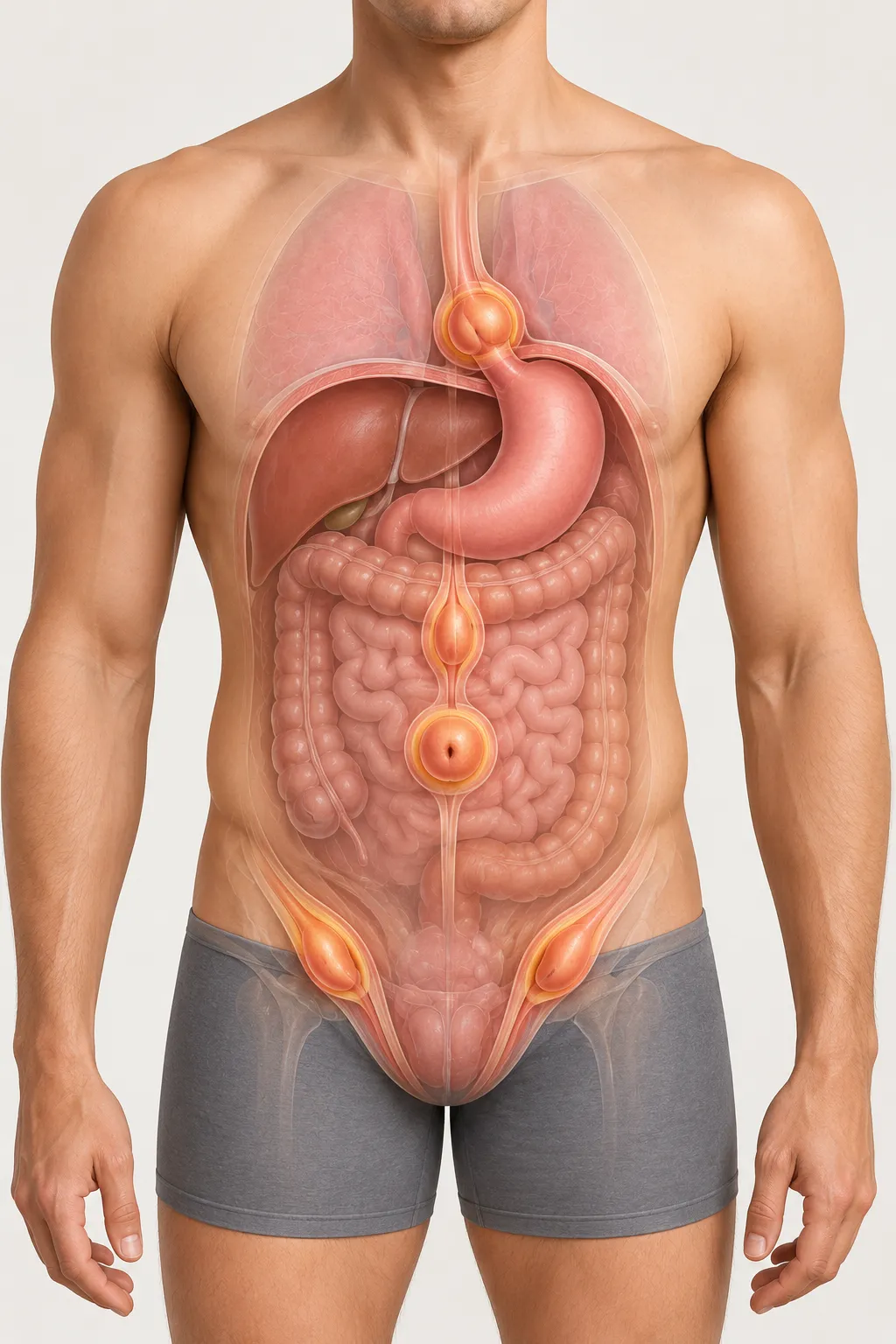
Recognising the type helps guide both urgency and the eventual treatment approach.
Can a Hernia Heal Without Surgery?
This is one of the most common hopes people quietly carry maybe it’ll just go away on its own. Unfortunately, the honest answer is no. A hernia is a structural gap in the muscle wall, and no amount of rest, exercise, or diet change will close that gap back up. What non-surgical approaches can do:
- A supportive hernia belt or truss can ease discomfort and reduce bulging temporarily
- Avoiding heavy lifting and straining can slow progression
- Managing chronic cough or constipation can reduce pressure on the weak spot
These measures manage symptoms, sometimes reasonably well for a while. But they don’t fix the underlying defect. Left alone, most hernias slowly enlarge over time, and the risk of complications rises the longer they’re left untreated. Surgery remains the only true corrective treatment.
Emergency Symptoms: Signs of a Strangulated Hernia
This is the part that genuinely deserves your full attention. A hernia can, in some cases, become trapped the tissue gets stuck outside the muscle wall and its blood supply gets cut off. This is called a strangulated hernia, and it’s a surgical emergency.
Watch for:
- Sudden, severe pain at the hernia site that doesn’t ease
- A bulge that turns red, dark, or purplish in colour
- The bulge becoming firm and impossible to push back in
- Nausea, vomiting, and fever accompanying the pain
- A general feeling of being seriously unwell
If any of these appear, this is not a “wait and see a doctor next week” situation. Get to a hospital immediately. Strangulation cuts off blood flow to the trapped tissue, and delay can lead to tissue damage that needs far more extensive surgery to fix.

When to See a Doctor About Hernia Symptoms
You don’t need to wait for an emergency to get checked. See a doctor if:
- You’ve noticed any new bulge, however small
- The bulge is growing larger over weeks or months
- Pain is becoming more frequent or more intense
- You’re avoiding certain movements or activities because of the discomfort
- You have digestive symptoms that seem to worsen after eating or bending over
Early evaluation means more treatment options and a much simpler surgical repair. Waiting until the hernia is large or painful only makes the eventual fix more complicated.
Diagnosis of Hernia Symptoms
Diagnosing a hernia is usually refreshingly straightforward. Most of the time, it starts with:
- Physical examination a doctor can often diagnose a hernia simply by feeling the bulge, sometimes asking you to cough or strain to see it more clearly
- Ultrasound used to confirm the hernia and assess its size, especially useful for less obvious cases
- CT scan occasionally used for more complex or internal hernias, like hiatal hernias, or to check for complications
- Endoscopy sometimes used specifically for hiatal hernias, to examine the stomach and esophagus directly
For most external hernias, a clinical exam alone gives a confident diagnosis. Imaging is added when there’s any uncertainty or when planning the surgical approach.
Hernia Symptoms Evaluation at Meyash Hospital, Hisar
At Meyash Hospital, Hisar, hernia evaluation starts with a straightforward, unhurried conversation about your symptoms, followed by a physical examination and any imaging needed to confirm the diagnosis. The goal is clarity, understanding exactly what type of hernia you have and how urgently it needs to be addressed.
When surgery is recommended, it’s typically performed using minimally invasive laparoscopic technique wherever appropriate, meaning smaller incisions, less post-operative pain, and a noticeably quicker return to your daily routine compared to traditional open repair.
Getting an Honest Opinion From Dr. Yashpal Singla
Every hernia is a little different, and Dr. Yashpal Singla takes that individual variation seriously factoring in hernia type, size, your activity level, and any complicating factors before recommending a treatment path.
Patients get a clear, honest picture of their options, including realistic timelines for surgery and recovery, rather than vague reassurance. That clarity often matters just as much as the surgery itself.
Managing Hernia Symptoms Before Surgery Is Scheduled
If you’ve been diagnosed and are simply waiting for your surgery date, there are sensible ways to manage day-to-day discomfort:
- Avoid heavy lifting or straining wherever possible
- Use a supportive hernia belt if your doctor recommends one
- Manage constipation and chronic cough, since both increase pressure on the weak spot
- Avoid activities that consistently trigger pain or bulging
- Watch closely for any signs of the bulge becoming firm, painful, or discoloured
These steps won’t fix the hernia, but they can genuinely make the waiting period more comfortable and safer, while you prepare for your scheduled procedure.
Conclusion
Hernia symptoms rarely appear out of nowhere they usually build gradually, starting with a small bulge or a subtle ache that grows more noticeable over time. Recognising the signs early, understanding which type you’re dealing with, and getting evaluated before things escalate makes an enormous difference to how simple your eventual treatment will be.
A hernia that’s caught early is almost always easier to fix than one that’s been left to grow.
CTA Section
If you’ve noticed a bulge or persistent discomfort that fits these signs, don’t wait for it to worsen. Dr. Yashpal Singla at Meyash Hospital, Hisar offers expert hernia evaluation and advanced laparoscopic repair. Book your consultation today.
FAQs
Q: Which treatment is best for hernia symptoms?
Surgical repair is the only definitive treatment for a hernia, typically done through minimally invasive laparoscopic technique. This closes the muscle gap permanently, with faster recovery compared to traditional open repair.
Q: What is the first stage of a hernia symptoms?
The earliest stage usually involves a small, sometimes barely noticeable bulge that appears with straining or standing and disappears when lying down, often with little to no pain at first.
Q: Do hernia symptoms get worse over time?
Yes, generally. Since the underlying muscle gap doesn’t close on its own, hernias tend to gradually enlarge, and symptoms like bulging and discomfort typically become more noticeable and frequent over months or years.
Q: Can hernia symptoms be mistaken for something else?
Yes, especially hiatal hernias, which often mimic acidity or GERD with heartburn and reflux. Groin hernias are sometimes mistaken for muscle strains, so a proper examination helps confirm the correct diagnosis.
Q: Are hernia symptoms different in women than men?
Inguinal hernias are more common in men, while femoral hernias occur more often in women. Symptoms themselves are largely similar, though women may notice groin bulges lower down, closer to the thigh crease.
Q: Is hernia symptom evaluation covered under cashless insurance at Meyash Hospital?
Hernia evaluation and repair surgery are commonly covered under most health insurance plans, with cashless facilities available depending on the insurer. It’s best to confirm your specific policy details with the Meyash Hospital, Hisar team directly.
This article has been reviewed by the medical team at Meyash Hospital, Hisar. For personalized advice, consult Dr. Yashpal Singla or our specialists directly.