
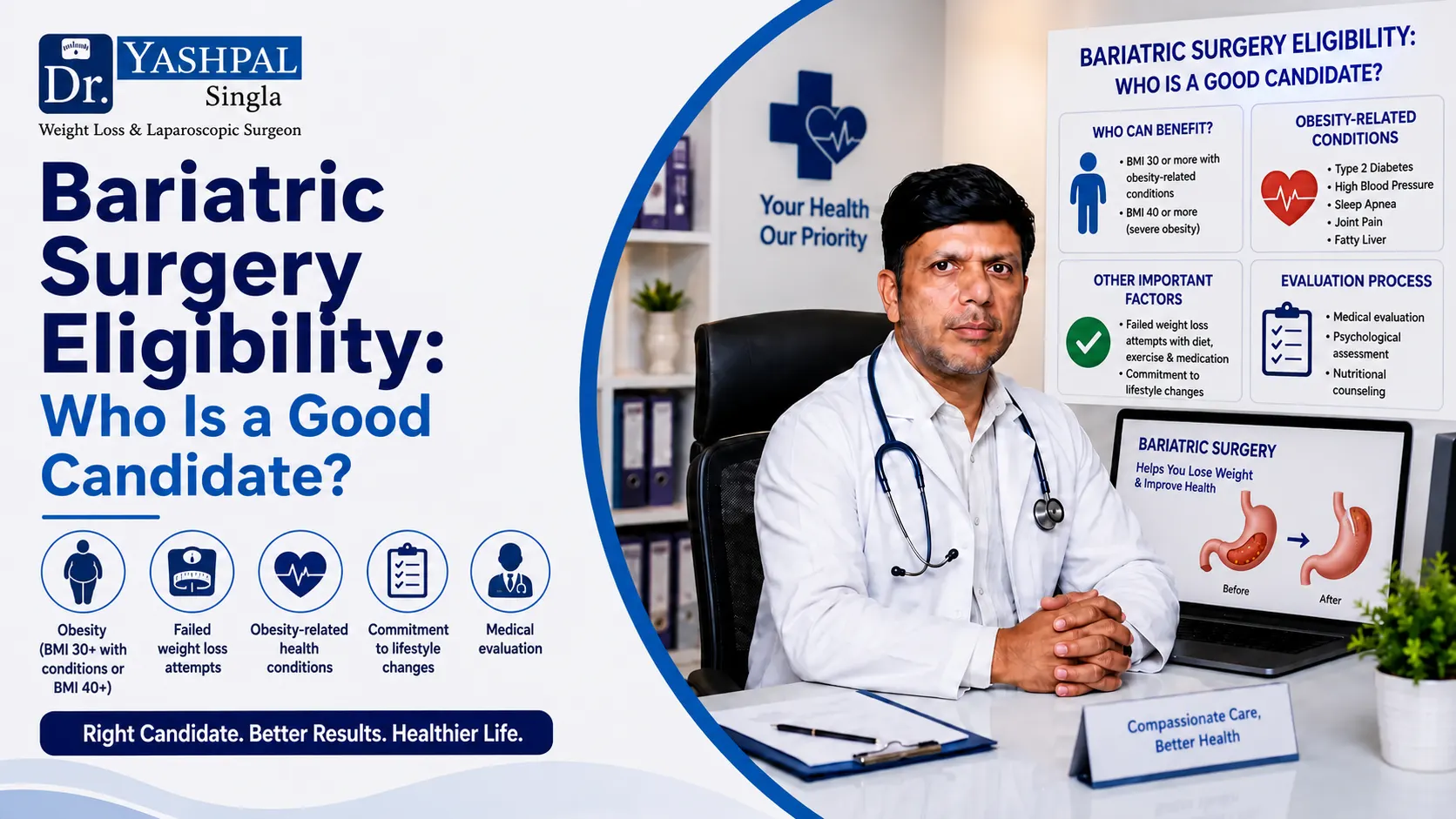
Somewhere after years of diets that didn’t hold, the question quietly shifts from “how do I lose weight” to “am I even eligible for surgery.” Bariatric surgery eligibility in India is primarily based on BMI generally 37.5 and above, or 32.5 and above if you also have a weight-related condition like diabetes or high blood pressure combined with a history of failed non-surgical weight loss attempts and overall fitness for surgery.
It’s not just a number on a scale, though. Surgeons look at the full picture before saying yes.
Let’s go through exactly what that full picture includes, so you know where you genuinely stand.
Who Is a Good Candidate for Bariatric Surgery?
A good candidate typically isn’t defined by a single number it’s a combination of factors working together. Broadly, someone is considered eligible when they meet the BMI threshold, have tried other weight-loss methods without lasting success, and are medically and psychologically fit for a major surgery.
BMI 37.5+ (or 32.5+ With Related Conditions) the Indian Criteria
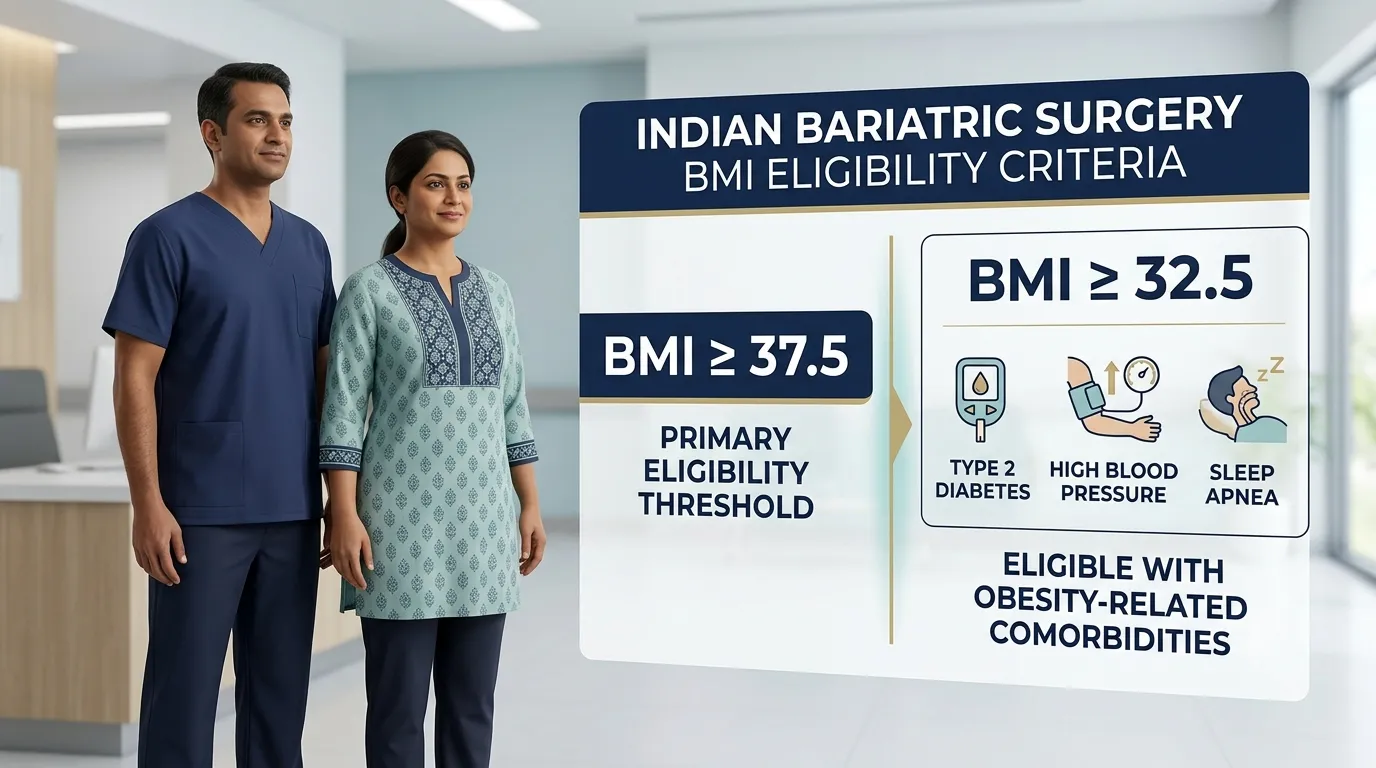
India follows slightly different, and honestly more realistic, BMI cutoffs than some Western countries, recognising that Indians tend to develop weight-related health issues at lower BMI levels. The current Indian guidelines generally consider:
- BMI of 37.5 or above eligible for bariatric surgery regardless of other conditions
- BMI of 32.5 or above eligible if accompanied by a significant weight-related condition, such as type-2 diabetes, high blood pressure, or sleep apnea
This lower threshold compared to international standards exists because Indian bodies often carry health risks like diabetes and heart disease at comparatively lower BMI levels than Western populations.
International BMI Benchmarks for Comparison
For context, international guidelines, particularly in the US and Europe, typically use:
- BMI of 40 or above eligible regardless of associated conditions
- BMI of 35 or above eligible with a related health condition
The gap between Indian and international benchmarks isn’t arbitrary. It reflects genuine differences in how body composition and metabolic risk show up across populations, and it’s part of why BMI criteria shouldn’t be applied as a one-size-fits-all global rule.
Who Is NOT Suitable for Bariatric Surgery?
Just as important as knowing who qualifies is understanding who typically doesn’t, at least not yet. Surgery isn’t recommended for:
- People whose weight gain is primarily due to an untreated hormonal or endocrine condition that hasn’t been properly addressed first
- Those with active, uncontrolled substance abuse or alcohol dependency
- Individuals with a severe, unmanaged psychiatric condition that would interfere with post-surgery lifestyle changes
- Anyone unable or unwilling to commit to the significant, permanent dietary and lifestyle changes surgery requires
- Patients with medical conditions that make general anaesthesia unsafe at this time
- Pregnant women, or those planning pregnancy in the immediate future
None of these are necessarily permanent disqualifications. Many can be addressed first, after which the surgery conversation can genuinely be reopened.
Related Health Conditions That Strengthen Eligibility
Certain health conditions don’t just accompany obesity, they actively strengthen the case for surgery, since bariatric surgery often significantly improves or resolves them.
Type-2 Diabetes
Weight-related type-2 diabetes is one of the strongest additional factors supporting eligibility, especially at the lower 32.5 BMI threshold. Bariatric surgery frequently leads to major improvement, and in many cases, remission of type-2 diabetes, making it a compelling case for surgery even before reaching the higher BMI cutoff.
Sleep Apnea & High Blood Pressure
Both conditions are directly worsened by excess weight, and both often improve substantially after significant weight loss. Their presence alongside a BMI of 32.5 or higher is generally enough to meet obesity surgery eligibility criteria in India.
Joint Problems From Excess Weight
Chronic joint pain, particularly in the knees and hips, caused or significantly worsened by excess body weight, is another commonly considered factor. Reduced weight-bearing stress after surgery often brings meaningful relief, which surgeons factor into the overall eligibility picture.
Can I Get Bariatric Surgery With a BMI of 30?
This comes up often, and the honest answer is: usually not, at least not through standard criteria. A BMI of 30 typically falls below both the Indian and international thresholds for bariatric surgery, even with related health conditions present.
That said, there are occasional exceptions considered on a case-by-case basis, particularly for:
- Patients with severe, difficult-to-control type-2 diabetes where standard treatment isn’t working
- Specific metabolic surgery protocols designed for lower BMI ranges in carefully selected cases
These situations are relatively uncommon and require a detailed, individual evaluation rather than a standard eligibility check. If your BMI is around 30, the more typical recommendation would be a structured, medically supervised weight-loss program first, with surgery reconsidered only if that genuinely doesn’t work.
Non-BMI Factors Surgeons Consider
BMI opens the conversation, but it doesn’t close it. Several other factors shape the final decision.
Age & Overall Fitness for Anesthesia
Most surgeons consider candidates between roughly 18 and 65 years old, though this isn’t a strict rule. What matters more is whether you’re medically fit to safely undergo general anaesthesia and a major surgical procedure, regardless of exact age.
Prior Weight-Loss Attempts
Surgeons generally want to see a genuine history of trying non-surgical weight loss supervised diet plans, exercise programs, or medical weight management before recommending surgery. This isn’t about doubting your effort; it’s about confirming that surgery is genuinely the next necessary step, not a shortcut being taken too early.
Psychological Readiness
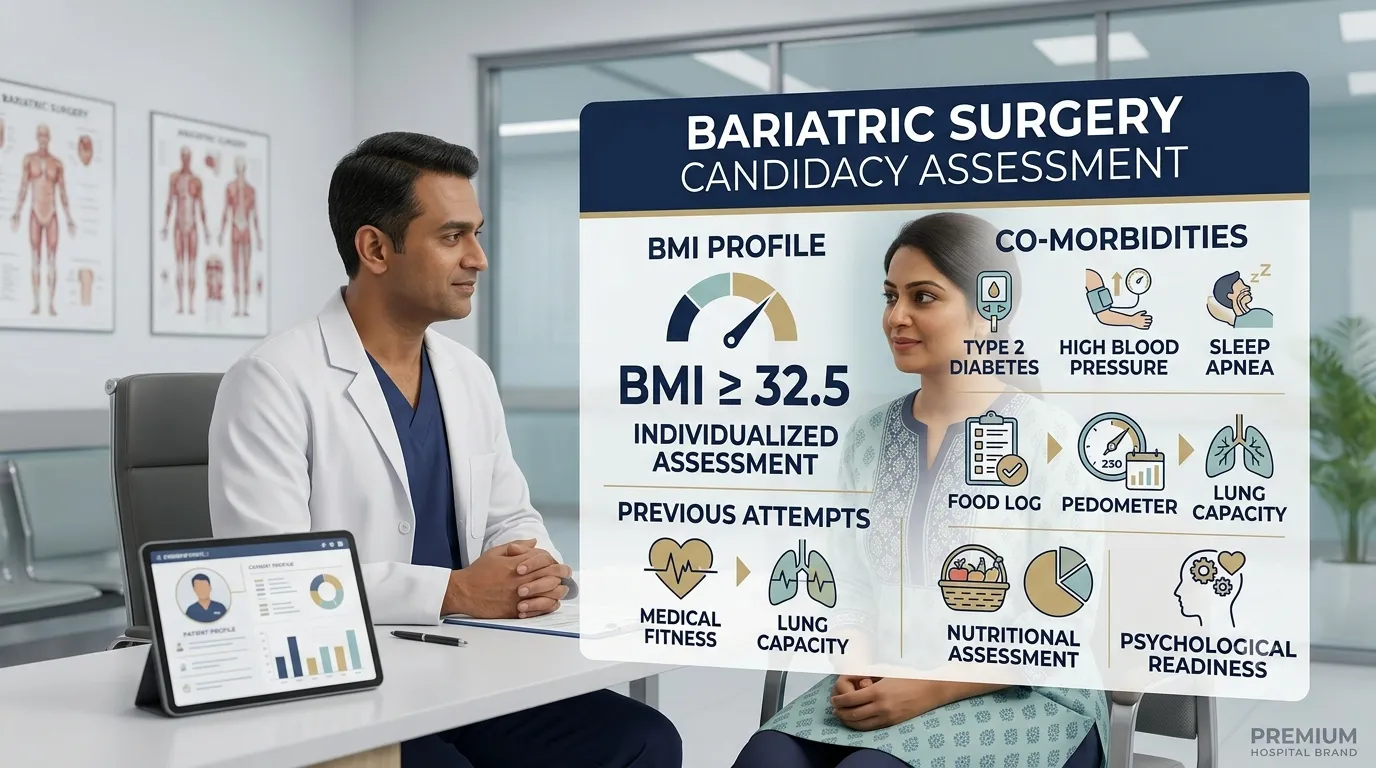
Bariatric surgery requires permanent, significant lifestyle changes in eating habits, portion sizes, and long-term follow-up. Surgeons and often a psychologist evaluate whether a patient is mentally prepared for this shift, since the surgery’s long-term success depends heavily on sustained behavioural change, not just the operation itself.
The Eligibility Evaluation Process
Getting a clear answer on eligibility usually involves a structured process rather than a single quick check:
- Initial consultation reviewing weight history, BMI, and related health conditions
- Medical evaluation blood tests, cardiac assessment, and other checks to confirm surgical fitness
- Nutritional assessment understanding current eating patterns and past weight-loss attempts
- Psychological evaluation assessing readiness for the lifestyle changes surgery demands
- Final review the surgical team consolidates findings to confirm eligibility and recommend the most suitable procedure
This layered process exists precisely because bariatric surgery is a significant, life-altering decision, and genuine eligibility means being ready for it on every front, not just the BMI chart.
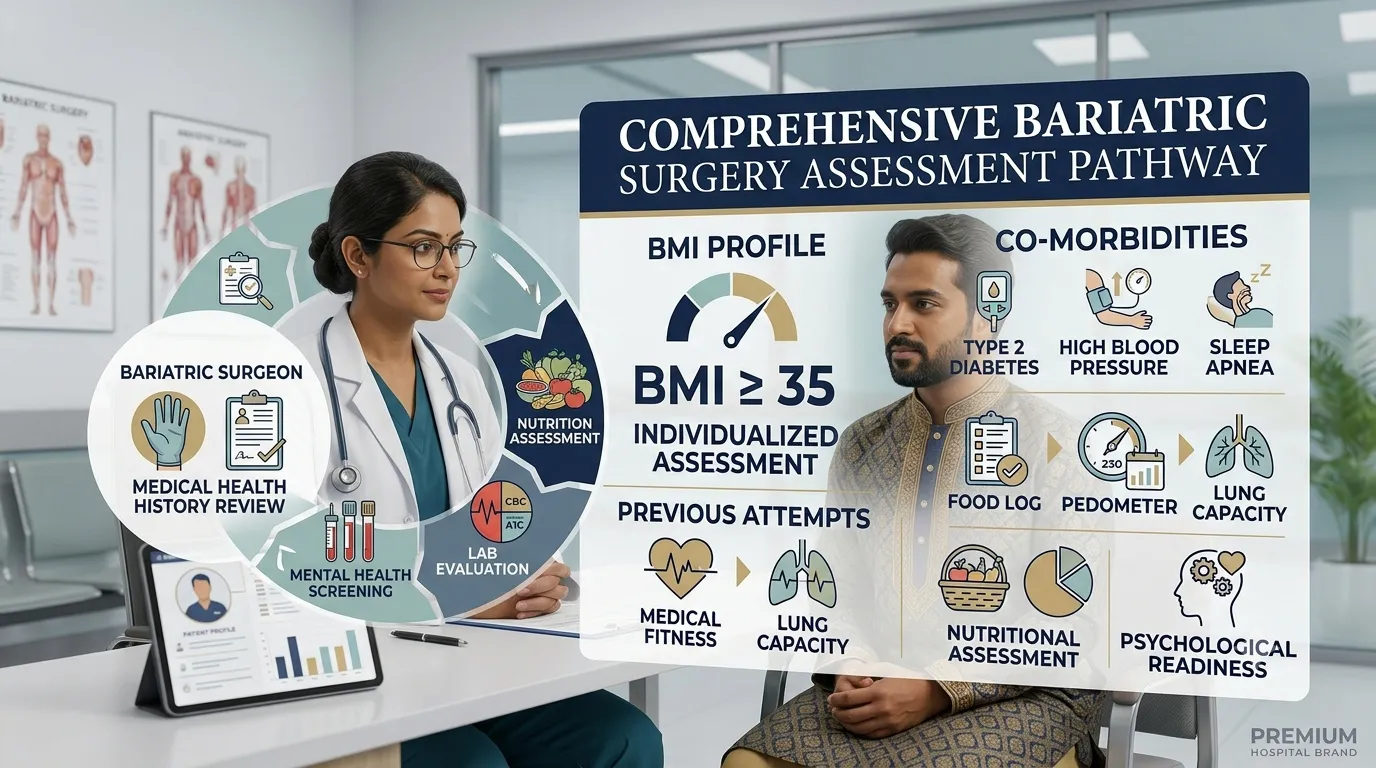
Bariatric Surgery Eligibility Assessment at Meyash Hospital, Hisar
At Meyash Hospital, Hisar, the eligibility assessment is thorough but genuinely supportive, not something designed to discourage anyone from asking. The process includes a detailed review of BMI, related health conditions, prior weight-loss history, and overall medical fitness, giving patients a clear, honest picture of where they stand.
If eligibility criteria aren’t fully met yet, the team works with patients on a structured path forward, rather than simply turning them away.
How Dr. Yashpal Singla Evaluates Candidacy Honestly
Dr. Yashpal Singla approaches eligibility evaluation with genuine honesty, rather than either an overly cautious “no” or an eager “yes” regardless of readiness.
Each patient’s BMI, health conditions, and personal history are considered together, and patients are given a clear explanation of exactly where they stand and what, if anything, needs to change before surgery becomes the right option. That transparency tends to build real trust early in the process.
What Happens If You Don’t Qualify Yet
Not qualifying today doesn’t mean the door is permanently closed. If you fall short of eligibility criteria, the typical next steps include:
- A structured, medically supervised weight-loss program to address BMI or related conditions first
- Treatment for any untreated hormonal, psychiatric, or medical condition standing in the way
- Nutritional counselling to build sustainable habits ahead of a future evaluation
- A scheduled re-evaluation after a defined period, once relevant factors have changed
Many patients who don’t qualify initially do become eligible later, once underlying issues are addressed. It’s genuinely worth staying engaged with the process rather than assuming a single “not yet” is the final word.
Conclusion
Bariatric surgery eligibility is about far more than stepping on a scale. BMI matters, but so do related health conditions, prior weight-loss efforts, medical fitness, and psychological readiness. Understanding where you genuinely stand and what, if anything, needs to shift is the clearest way to move toward a decision that’s both safe and right for you.
CTA Section
If you’re wondering whether you qualify for bariatric surgery, an honest evaluation is the best place to start. Dr. Yashpal Singla at Meyash Hospital, Hisar offers thorough, transparent eligibility assessments. Book your consultation today.
FAQs
Q: Who can qualify for bariatric surgery eligibility?
Generally, those with a BMI of 37.5 or above, or 32.5 and above with a related condition like diabetes, along with a history of unsuccessful non-surgical weight loss and overall medical fitness for surgery.
Q: Can I get bariatric surgery eligibility with a BMI of 30?
Usually not through standard criteria, since 30 falls below both Indian and international thresholds. Rare exceptions exist for severe, uncontrolled diabetes, evaluated on an individual, case-by-case basis.
Q: Does insurance require a minimum BMI for approval bariatric surgery eligibility?
Yes, many insurers follow similar BMI-based criteria to determine coverage for bariatric surgery eligibility. It’s important to check your specific policy’s requirements alongside the clinical eligibility criteria.
Q: Can teenagers for bariatric surgery eligibility need it?
In select, severe cases, adolescents may be considered eligible, but this requires specialised paediatric evaluation, parental involvement, and a much more cautious, individualised assessment than adult candidacy.
Q: Is bariatric surgery eligibility different for men and women?
The core BMI and health-condition criteria apply equally to both. However, factors like pregnancy planning are specifically considered for women during the eligibility evaluation process.
Q: Is the bariatric surgery eligibility consultation covered under cashless insurance at Meyash Hospital?
Initial consultations are sometimes covered depending on your insurance policy, though this varies by insurer. It’s best to confirm specific coverage details directly with the Meyash Hospital, Hisar team.
This article has been reviewed by the medical team at Meyash Hospital, Hisar. For personalized advice, consult Dr. Yashpal Singla or our specialists directly.