

Deciding to undergo weight loss surgery is a big step. For many people, it comes after years of trying different diets, exercise routines, and other treatments without achieving lasting results. Bariatric surgery can help people living with obesity lose a significant amount of weight and improve their overall health.
Understanding weight loss after bariatric surgery can help you set realistic expectations and feel more confident during your recovery. It is important to remember that the number on the weighing scale is only one part of the journey. Improvements in blood sugar, mobility, sleep, and daily comfort are also meaningful signs of progress.
In this guide, we will explain what affects weight loss, what you may experience month by month, why weight loss sometimes slows down, and how to support your health after surgery.
What Determines How Much Weight You’ll Lose?
There is no fixed amount of weight that every patient will lose after bariatric surgery. Two people who undergo the same procedure may have very different results.
Several factors influence weight loss after bariatric surgery, and understanding them can help you avoid comparing your progress with someone else’s.
Starting Weight & BMI
Your starting weight is one of the main factors that affects how much weight you may lose after surgery.
For example, a person who weighs 150 kg may lose more kilograms than someone who weighs 100 kg, even if both lose a similar percentage of their starting weight.
This is why doctors often look at percentage total body weight loss rather than focusing only on the number of kilograms lost.
Procedure Type (Sleeve vs Bypass)
The two commonly performed procedures are sleeve gastrectomy and gastric bypass.
Sleeve gastrectomy involves removing a large part of the stomach, leaving a smaller, tube-shaped stomach. This helps you feel full after eating smaller portions.
Gastric bypass involves creating a small stomach pouch and changing the route food takes through the small intestine. It reduces food intake and changes certain digestive hormones that affect appetite and blood sugar.
Adherence to Diet & Activity Guidelines
Surgery changes how much food your stomach can hold, but your daily habits still play an important role.
After surgery, your medical team will guide you through different stages of eating, starting with liquids and gradually moving toward soft foods and regular meals.
Following these instructions helps your body recover and ensures that you get the nutrients you need.
Other habits that support weight loss after bariatric surgery include:
- Eating small, balanced meals as advised by your dietitian.
- Getting enough protein to support muscle and tissue repair.
- Drinking enough fluids throughout the day.
- Taking prescribed vitamins and mineral supplements.
- Staying physically active as your surgeon allows.
- Attending follow-up appointments and completing recommended blood tests.
Weight Loss After Bariatric Surgery: Month-by-Month Timeline
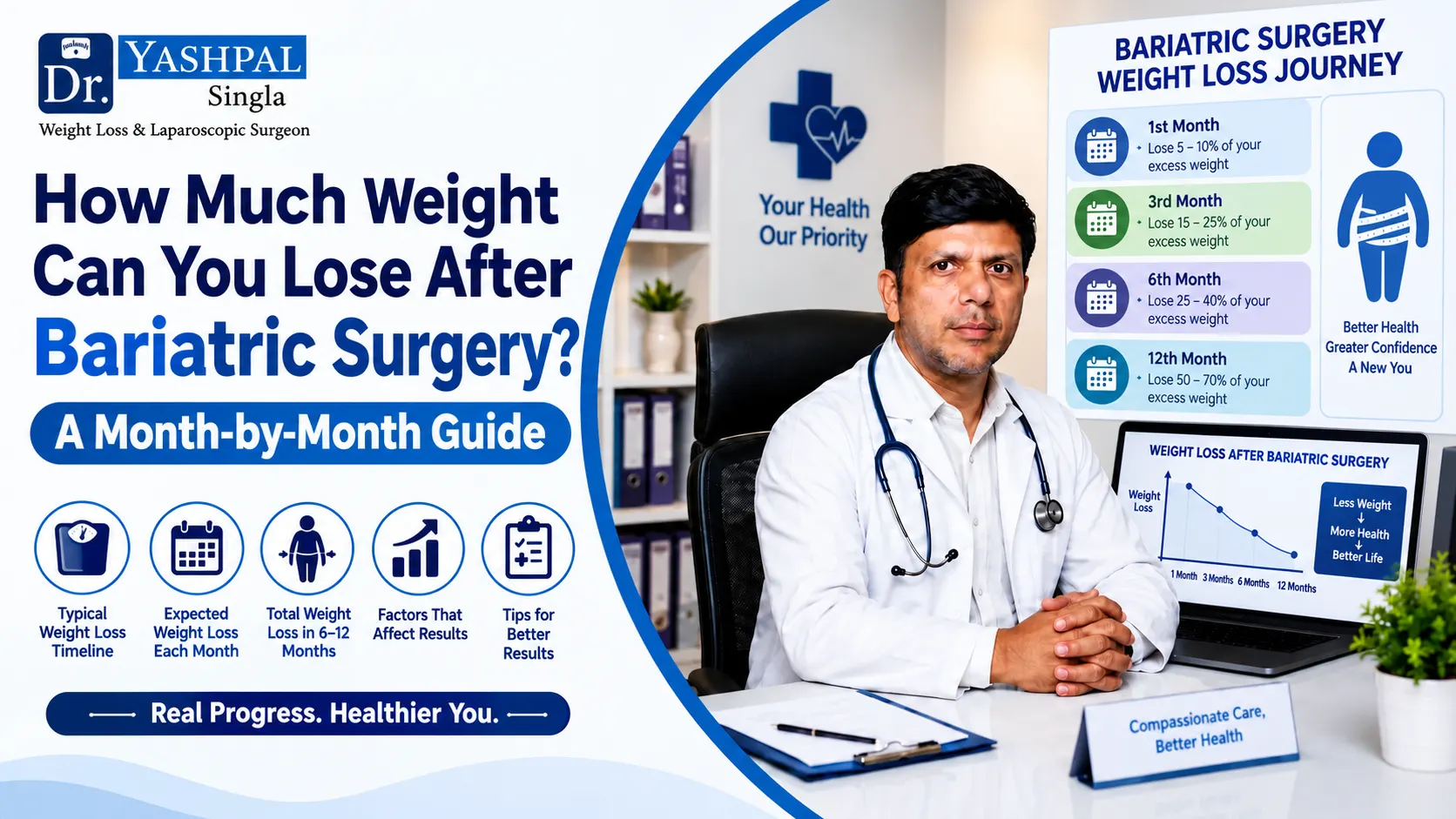
It helps to understand that weight loss after bariatric surgery usually follows a pattern. Weight often drops more quickly during the early months and gradually slows as the body adjusts.
The timeline below describes common stages of recovery and weight change. It is a general guide, not a strict schedule. Your actual progress may be faster or slower depending on your procedure, starting weight, health, and recovery.
Weeks 1–2: The Liquid Diet Phase
The first two weeks after surgery are mainly focused on healing and helping your stomach adjust to its new size.
During this time, your diet will usually consist of liquids. Depending on your surgeon’s plan, you may begin with clear liquids and gradually move to fuller liquids or protein-rich drinks.
Your main priorities during these first two weeks should be:
- Following the prescribed liquid diet.
- Taking small, frequent sips to stay hydrated.
- Meeting your protein goals as advised by your care team.
- Taking prescribed medications and supplements.
- Getting enough rest and walking gently as recommended.
Do not rush to eat solid foods simply because you feel hungry or believe you are recovering quickly.
Your stomach needs time to heal, and moving to the next food stage too early may cause discomfort or other problems.
Month 1: The “Honeymoon” Rapid Loss Phase
The first month is often when patients begin to notice a visible change in their weight and clothing.
Food intake is still limited, and the body is adjusting to smaller portions. This can lead to relatively rapid weight loss during the early weeks.
However, there is no single number that everyone should expect to lose in the first month. The amount depends on your starting weight, the procedure, fluid changes, and how your body responds to surgery.
During this stage, weight loss after bariatric surgery should not be judged only by the number of kilograms lost. Your ability to stay hydrated, tolerate food, recover from surgery, and maintain your energy levels is just as important.
Months 2–3: Steady Continued Loss

By the second and third months, many patients have moved from liquids to soft foods and then to a wider range of foods, depending on their recovery and their surgeon’s instructions.
This is often a period of continued weight loss.
Your stomach is still smaller, and you may feel full after eating only a small amount. As your eating routine becomes more regular, it is important to focus on the quality of food rather than simply eating less.
Your meals should provide enough protein, vitamins, minerals, and other nutrients to support healing and overall health.
You may also begin to notice changes in your daily routine. Walking may feel easier, clothes may fit differently, and activities that once felt tiring may become more comfortable.
A healthy weight loss after bariatric surgery is not about pushing yourself to lose as much as possible in the first three months. It is about building habits that you can maintain safely.
Months 4–6: Losing Momentum Slightly
Around months four to six, the rate of weight loss may begin to slow.
This can feel frustrating, particularly if you were losing weight quickly during the first few months.
Some people may experience short periods when the scale does not change at all.
During this stage, focus on:
- Following your recommended meal plan.
- Eating enough protein and other essential nutrients.
- Drinking fluids throughout the day.
- Gradually increasing physical activity as advised.
- Keeping up with follow-up appointments and blood tests.
It may also be helpful to look at other signs of progress, such as improved stamina, better mobility, and changes in clothing size.
The goal of weight loss after bariatric surgery is not to maintain the same rapid pace every month. It is to support steady progress while protecting your health.
Months 6–12: Approaching Your Lowest Weight
The second half of the first year is often a period of continued weight loss, although the pace may be slower than it was in the beginning.
Some patients approach their lowest weight during this stage, while others continue losing weight into the second year.
You may notice that your weight changes from week to week. A few weeks of little or no change may be followed by another period of weight loss.
Regular follow-up care helps identify nutritional deficiencies and other issues before they become more serious.
Remember that weight loss after bariatric surgery is a long-term process. Your progress during months six to twelve should be viewed as part of the bigger picture rather than a race to reach a particular number.
Months 12–18: Stabilising
Between 12 and 18 months, many patients begin to approach a more stable weight.
For some, weight loss may continue gradually. For others, the scale may remain relatively steady for longer periods.
This is a normal part of the body’s adjustment after major weight loss.
By this stage, patients are usually eating a wider range of foods and following a more established daily routine.
The aim of weight loss after bariatric surgery is not simply to reach your lowest weight. It is to maintain the improvements in your health and quality of life for years to come.
What Is a Weight Loss Stall (and Why It’s Normal)?
A weight loss stall, also called a plateau, is a period when your weight stays nearly the same even though you are following your post-surgery plan.
It can happen at different stages of recovery, including during the first few months.
For many patients, a plateau is one of the most confusing parts of weight loss after bariatric surgery. You may have been losing weight consistently and then suddenly notice that the scale has not moved for a week or two.
Why does a weight loss stall happen?
There are several reasons why your weight may stop changing for a while.
1. Your body is adjusting to weight loss.
As you lose weight, your body needs less energy to function. This can slow the rate at which you lose additional weight.
2. Changes in fluid balance.
Water retention can temporarily hide fat loss on the scale. Salt intake, hydration, hormonal changes, and other factors can affect your weight from one day to the next.
3. Changes in activity.
Exercise can affect muscle mass and fluid balance. Even when your fitness is improving, the number on the scale may not change as quickly as you expect.
4. Changes in eating habits.
As your diet progresses, portion sizes and food choices may change. Frequent snacking, sugary drinks, or difficulty meeting your protein goals may affect your overall progress.
What should you do during a plateau?
The first step is to avoid making sudden or extreme changes to your diet.
Do not skip meals, severely restrict food, or increase exercise beyond what your medical team has recommended.
Instead:
- Review your eating and drinking habits.
- Make sure you are meeting your protein and hydration goals.
- Continue your recommended physical activity.
- Track your weight at a reasonable frequency rather than checking it several times a day.
- Speak with your bariatric team if the plateau continues or you have other concerns.
A plateau may be a normal part of weight loss after bariatric surgery, but persistent lack of progress deserves a closer look.
Average Total Weight Loss by Procedure Type

The amount of weight you lose depends partly on which procedure you undergo.
Sleeve gastrectomy and gastric bypass are both effective treatments for obesity, but average results can differ.
Sleeve gastrectomy
Sleeve gastrectomy reduces the size of the stomach, helping patients feel full after smaller meals.
Many patients lose a meaningful percentage of their starting body weight during the first one to two years.
The exact amount depends on the patient’s starting BMI, medical history, eating habits, and follow-up care.
Gastric bypass
Gastric bypass reduces stomach capacity and changes the route food takes through the small intestine.
It can lead to substantial weight loss and may offer additional benefits for some patients with type 2 diabetes or acid reflux.
However, the procedure also requires lifelong nutritional monitoring because certain nutrient deficiencies are more likely after intestinal bypass.
Understanding percentage total weight loss
Percentage total weight loss measures how much weight you have lost compared with your starting weight.
For example, if someone weighs 120 kg before surgery and loses 24 kg, that represents a 20% reduction in their starting body weight.
This is different from excess weight loss, which measures the amount lost compared with weight above a reference weight.
Both measurements are used in bariatric research, so it is important to understand which one is being discussed when comparing results.
What should you expect personally?
Rather than relying on a single average, ask your surgeon to explain the expected range of results for someone with your starting weight, BMI, and medical history.
The goal of weight loss after bariatric surgery is not to match another person’s results. It is to achieve meaningful, sustainable improvements in your own health.
Signs You’re Losing Weight Too Slowly (or Too Fast)
Weight loss after surgery can vary from person to person. Some patients lose weight quickly, while others follow a more gradual pattern.
Signs that your weight loss may need review
Consider contacting your bariatric team if:
- Your weight has stopped changing for a prolonged period and you are concerned about your progress.
- You are consistently struggling to follow your prescribed meal plan.
- You are unable to meet your protein or fluid goals.
- You experience persistent nausea, vomiting, or difficulty tolerating food.
- Your weight loss is much slower than the range discussed with your surgeon.
- You notice weight regain that continues over time.
Slow progress does not automatically mean that your surgery has failed. Your care team can review your diet, activity, medications, and medical history to understand what may be happening.
When weight loss may be too rapid
Rapid weight loss can happen during the early months after surgery. However, losing weight too quickly while struggling to eat or drink enough can increase the risk of dehydration, nutritional deficiencies, and loss of muscle.
Contact your medical team if you experience:
- Persistent dizziness or weakness.
- Very dark urine or significantly reduced urination.
- Difficulty drinking enough fluids.
- Repeated vomiting.
- Severe fatigue that affects daily activities.
- Noticeable hair loss along with other signs of poor nutrition.
Seek urgent medical attention if you experience severe abdominal pain, chest pain, difficulty breathing, fainting, fever, or repeated vomiting with an inability to keep fluids down.
A healthy weight loss after bariatric surgery should support your recovery, not leave you feeling constantly unwell or unable to meet your nutritional needs.
Tracking Progress at Meyash Hospital, Hisar
Weight loss surgery is not a one-time event. The weeks and months after the procedure are an important part of your treatment.
Regular follow-up appointments help your medical team monitor your progress, review your nutritional needs, and identify problems that may affect your recovery.
At Meyash Hospital, Hisar, patients considering or recovering from bariatric surgery can ask about the available follow-up arrangements, nutritional guidance, and monitoring services.
Structured Follow-Up Support From Dr. Yashpal Singla’s Team
Dr. Yashpal Singla can discuss the factors that may affect a patient’s recovery and weight loss goals, depending on the services available at Meyash Hospital.
A structured follow-up plan may involve:
Reviewing food intake: Your care team can help assess whether you are eating enough protein and following the recommended stages of your post-surgery diet.
Checking nutritional health: Blood tests may be recommended to check for deficiencies in iron, vitamin B12, vitamin D, calcium, and other nutrients.
Reviewing physical activity: Your medical team can guide you on gradually returning to exercise and building a routine that supports your health.
A consistent follow-up routine can help make weight loss after bariatric surgery safer and more manageable.
How to Support Healthy Weight Loss After Surgery
The months after bariatric surgery are a time of adjustment. Your stomach is smaller, your eating habits are changing, and your body is getting used to a new routine.
The choices you make during this period can help you protect your health and maintain your progress.
Here are some practical ways to support weight loss after bariatric surgery while giving your body the nutrients it needs.
1. Follow Your Prescribed Diet Plan
Your stomach needs time to heal after surgery. That is why your medical team will guide you through different stages of eating.
You may begin with clear liquids, move to full liquids, and then gradually introduce soft foods and regular meals.
2. Focus on Protein
Protein plays an important role in healing, maintaining muscle, and supporting overall health.
After surgery, your smaller stomach may make it difficult to eat large amounts of food. This is why your dietitian may recommend prioritizing protein-rich foods.
Depending on your food stage and tolerance, protein sources may include:
- Eggs
- Yogurt or other suitable dairy products
- Fish and lean meats
- Lentils and other pulses
- Tofu and other plant-based protein sources
- Prescribed protein supplements
3. Stay Hydrated
Drinking enough fluids is important for digestion, energy, and recovery.
After surgery, you may not be able to drink large amounts at once. Taking small, frequent sips throughout the day can help you meet your fluid goals.
Signs of dehydration can include dark urine, dizziness, dry mouth, and reduced urination.
4. Eat Slowly and Pay Attention to Fullness
Your stomach can hold much less food after surgery, so eating too quickly or taking large bites may cause discomfort.
Try to:
- Eat slowly and chew food thoroughly.
- Take small bites.
- Stop eating when you feel comfortably full.
- Avoid forcing yourself to finish a meal.
- Follow your team’s advice about meal timing and portion sizes.
Learning to recognize fullness can make daily eating more comfortable and help you develop habits that support long-term weight management.
5. Stay Physically Active
Physical activity can support heart health, muscle strength, mood, and overall fitness.
During the early recovery period, your surgeon may recommend short, gentle walks. As you heal, you can gradually increase activity according to your medical team’s advice.
Over time, your routine may include walking, strength exercises, and other activities that you enjoy and can perform safely.
6. Take Your Prescribed Supplements
Bariatric surgery can increase the risk of nutritional deficiencies, especially when food intake is limited or nutrient absorption changes.
Your doctor may prescribe vitamins and minerals such as a bariatric multivitamin, vitamin B12, iron, calcium, and vitamin D, depending on your procedure and test results.
7. Attend Regular Follow-Up Appointments
Follow-up visits help your medical team understand how your body is responding to surgery.
These appointments may include weight checks, nutritional reviews, blood tests, and discussions about your eating habits and physical activity.
They are also an opportunity to ask questions about plateaus, changing appetite, or concerns about weight regain.
Remember, weight loss after bariatric surgery is a long-term health journey. Regular follow-up care can help you stay on track and address concerns before they become more difficult to manage.
Conclusion
Bariatric surgery can help people living with obesity achieve meaningful weight loss and improve health conditions linked to excess weight. However, the amount of weight you lose and how quickly it happens will depend on several factors.
The first few months often bring faster weight loss, while progress may become more gradual as your body adjusts. Plateaus are common, and reaching a stable weight can take 12 to 18 months or longer.
Understanding weight loss after bariatric surgery can help you set realistic expectations and recognize that progress is about much more than a number on the scale.
Take the Next Step Toward Better Health
At Meyash Hospital, Hisar, you can ask about consultation and follow-up options to understand how your progress can be monitored and what support may be available.
Speak with Dr. Yashpal Singla about your weight loss goals, recovery concerns, and the steps involved in long-term care.
Book a consultation to discuss your weight management goals and learn more about the care and guidance you may need after bariatric surgery.
FAQs
1. How much weight do you lose in the first month after bariatric surgery?
The amount of weight lost during the first month varies from person to person. Many patients experience noticeable weight loss during this period, but the exact amount depends on their starting weight, type of surgery, and recovery.
2. How long does it take to lose 100 pounds after bariatric surgery?
Losing 100 pounds can take anywhere from several months to more than a year, depending on your starting weight, procedure, and individual response to treatment. For someone with a higher starting weight, losing 100 pounds may be possible within the first year. For others, it may take longer or may not be an appropriate target.
3. Is it normal to stop losing weight for a few weeks?
Yes. A temporary weight loss stall is common after bariatric surgery. Your weight may remain stable for a short period because of changes in fluid balance, activity, and the body’s adjustment to weight loss.
4. Do men and women lose weight at different rates after surgery?
Men and women may experience different average weight loss patterns after bariatric surgery. Factors such as starting weight, body composition, hormones, age, and medical conditions can influence the rate of weight loss.
5. What happens if I’m not losing enough weight?
If you feel that your weight loss is slower than expected, the first step is to discuss it with your bariatric team. Your doctor may review your food intake, protein levels, physical activity, medications, and medical history to identify possible reasons.