

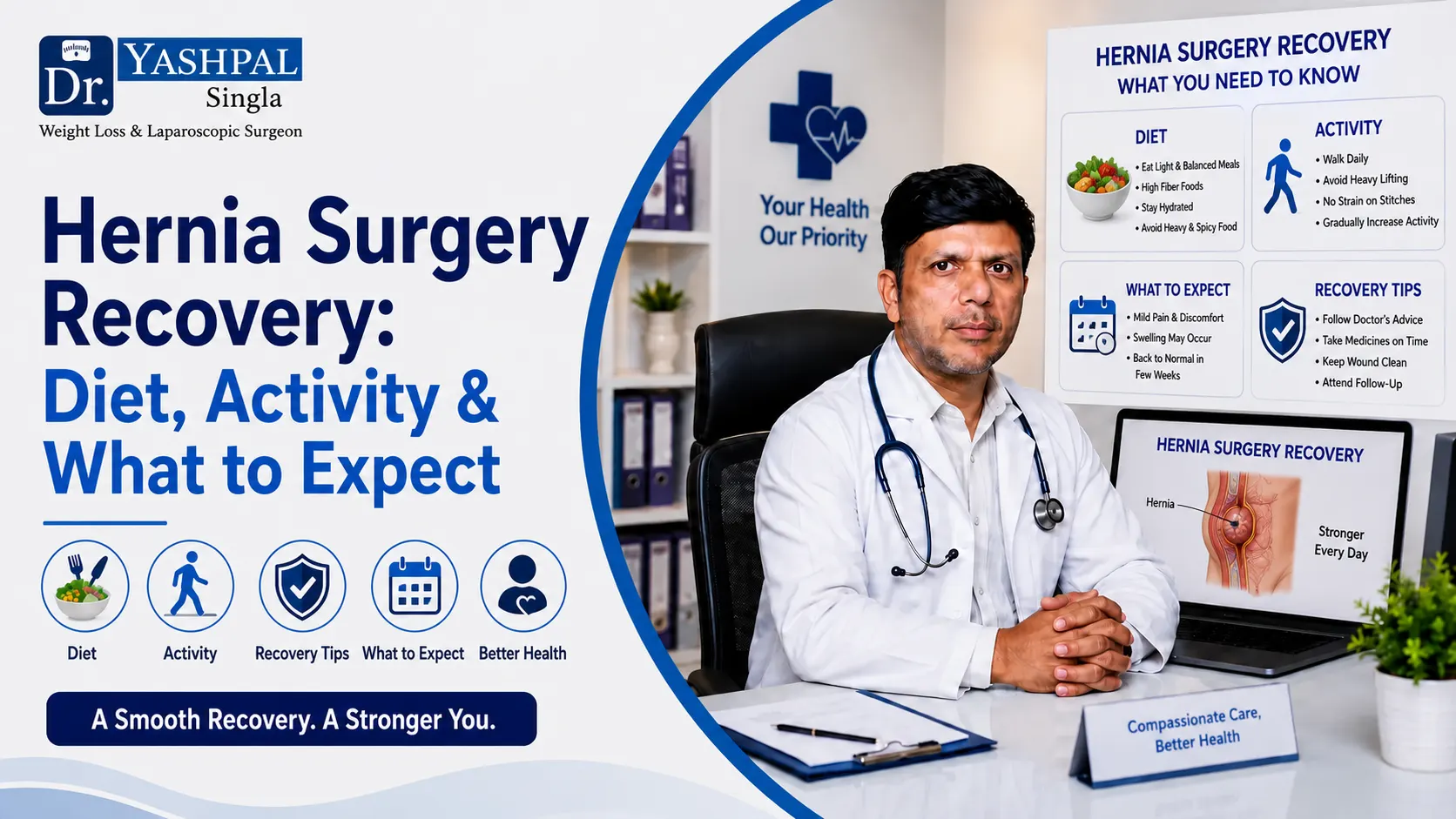
Surgery’s done. Now comes the part nobody really prepares you for the days of not knowing what’s normal and what isn’t. Hernia surgery recovery typically takes about 4 to 6 weeks for a full return to normal activity, though most people feel considerably better within the first 1–2 weeks. The early days involve rest, gentle movement, and careful attention to diet, while the following weeks are about gradually building back to your usual routine, lifting, and exercise.
Let’s walk through this properly day by day, week by week so you know exactly what to expect and what’s simply part of healing.
What to Expect Right After Hernia Surgery
Right after surgery, you’ll likely feel groggy from the anaesthesia, and that’s completely normal. In the first few hours:
- Mild to moderate soreness around the incision sites is expected
- Some swelling or bruising near the surgical area is common
- You may feel bloated from the gas used during laparoscopic surgery
- Walking, even a short distance, is usually encouraged the same day
- Most patients go home within 24 hours for laparoscopic repair
The first day is mostly about rest, staying hydrated, and letting the anaesthesia wear off fully. Don’t be alarmed if you feel more tired than expected your body is doing quiet, important work behind the scenes.

What Is the Hardest Day After Hernia Surgery?
Honestly, for most patients, it’s day 2 or 3, not the day of surgery itself. Here’s why: the initial anaesthesia and adrenaline wear off, swelling tends to peak, and the reality of restricted movement starts to feel more noticeable.
Common experiences around this point:
- Soreness feels more pronounced than on day one
- Getting in and out of bed or a chair can feel surprisingly effortful
- Coughing, sneezing, or laughing can genuinely hurt
- Mild fatigue and a general “not quite myself” feeling
This is completely expected and passes within a day or two. Gentle movement, prescribed pain relief, and patience through this stretch make a real difference. Knowing in advance that day 2–3 tends to be the toughest can make it feel far less alarming when it actually happens.
Hernia Surgery Recovery Timeline
Here’s a realistic, week-by-week picture of what recovery genuinely looks like.
Days 1–3: Rest & Pain Management
This stage is about rest, short gentle walks, and staying ahead of discomfort with prescribed pain medication. Avoid any lifting, straining, or sudden movements. Sleep, hydration, and light meals support healing during this window.
Week 1: Light Activity Resumes
Soreness noticeably eases. Most people can manage light household activities, short walks, and basic self-care without much difficulty. Heavy lifting and strenuous movement, however, remain strictly off-limits.
Weeks 2–4: Gradual Return to Normal
Energy levels continue improving steadily. Many patients return to desk-based work around week 2, and gradually reintroduce more normal daily activity through weeks 3 and 4. Physical strain should still be approached cautiously.
Weeks 4–6: Lifting & Exercise Resume

By this stage, most patients are cleared for heavier lifting, more vigorous exercise, and a full return to physically demanding work. This timeline can shift slightly depending on hernia type, surgical approach, and individual healing pace.
What Should You Eat During Hernia Recovery?
Diet plays a genuinely important role here, mostly because constipation and straining are two things you really want to avoid post-surgery.

Focus on:
- High-fibre foods fruits, vegetables, whole grains, and dals, which help prevent constipation
- Lean proteins like dal, eggs, chicken, or fish, which support tissue healing
- Plenty of water through the day
- Light, easily digestible meals in the first few days, gradually returning to your normal diet
- Warm soups and khichdi-style meals, which are gentle on digestion during early recovery
A well-managed hernia recovery diet doesn’t need to be complicated. The goal is simply supporting healing while keeping digestion smooth and comfortable.
What Foods Worsen Hernia Recovery (and Why)
Certain foods can make recovery genuinely harder, mostly by triggering bloating, constipation, or unnecessary strain.
- Fried and heavily oily foods, which can cause bloating and sluggish digestion
- Carbonated drinks, which add gas and abdominal discomfort
- Excess spicy food, which can irritate digestion during the healing period
- Low-fibre, highly processed foods, which increase the risk of constipation
- Large, heavy meals, which put unnecessary pressure on a healing abdomen
Straining during a bowel movement is one of the more common, avoidable things that can stress a fresh repair. Keeping digestion smooth through food choices genuinely protects your surgical site during those early weeks.
Activity Restrictions During Recovery
Certain activities need to wait, even if you’re feeling reasonably good early on:
- No heavy lifting (generally nothing over 5 kg) for at least 4–6 weeks
- Avoid strenuous exercise, running, or intense gym sessions until cleared
- Avoid activities that involve straining, twisting, or sudden abdominal pressure
- Limit prolonged standing or sitting in one position for very long stretches early on
- Avoid driving until you’re fully off pain medication and can move comfortably
These restrictions aren’t arbitrary they exist specifically to protect the surgical repair while your tissue rebuilds strength. Rushing past them is one of the more common causes of complications or recurrence.
Warning Signs During Recovery That Need a Doctor
Most recovery goes smoothly, but certain signs mean it’s time to call your surgeon rather than wait it out:
- Increasing pain instead of gradual improvement
- Redness, warmth, or discharge from the incision site
- Fever or chills
- Persistent nausea or vomiting
- A new or growing bulge at the surgical site
- Significant swelling that seems to be worsening rather than settling
Recovery involves some discomfort, but it shouldn’t involve worsening symptoms. If something feels like it’s heading in the wrong direction rather than gradually improving, that’s your cue to get checked rather than assume it’ll pass.
Hernia Surgery Recovery Support at Meyash Hospital, Hisar
At Meyash Hospital, Hisar, recovery support doesn’t end when you’re discharged. Patients are given clear, practical guidance on activity restrictions, diet, and warning signs before they even leave the hospital, so there’s no guessing involved during those early, uncertain days at home.
Follow-up appointments are scheduled to monitor healing, check the incision sites, and catch any early signs of complications well before they become serious. The focus throughout is on making sure recovery feels supported, not just left to chance once you walk out the door.
Follow-Up Care Under Dr. Yashpal Singla’s Team
Dr. Yashpal Singla‘s team places genuine emphasis on structured follow-up after laparoscopic recovery, recognising that the surgery itself is only part of the journey. Patients are guided through each recovery phase with clear expectations, and questions or concerns during the healing period are addressed promptly rather than left until the next scheduled visit. That ongoing support often makes the difference between an anxious recovery and a confident one.
Tips to Speed Up Hernia Surgery Recovery Safely
A few genuinely helpful habits can support smoother, faster healing without cutting corners:
- Walk gently and regularly from day one, rather than staying completely still
- Keep meals light, high-fibre, and well-hydrated to avoid constipation
- Take pain medication as prescribed rather than pushing through discomfort unnecessarily
- Support your abdomen with a pillow when coughing, sneezing, or laughing
- Follow your surgeon’s specific activity timeline rather than comparing to someone else’s recovery
- Attend every follow-up appointment, even if you’re feeling fine
Recovery isn’t a race, and trying to rush past post-surgery restrictions too quickly is one of the more common, preventable causes of setbacks.
Conclusion
Hernia surgery recovery genuinely does get easier with each passing week, even when the first few days feel harder than expected. Sticking to the timeline, eating sensibly, respecting activity restrictions, and staying alert to warning signs gives your body exactly what it needs to heal properly. Most people are back to their full, normal life within 4 to 6 weeks, often sooner.
CTA
If you’re recovering from hernia surgery and have questions or concerns, don’t wait for your next appointment. Dr. Yashpal Singla’s team at Meyash Hospital, Hisar offers dedicated post-surgery follow-up and support. Book your consultation today.
FAQs
Q: What foods worsen hernia surgery recovery?
Fried, oily, spicy, and heavily processed foods can trigger bloating, constipation, or digestive strain, all of which put unnecessary pressure on a healing surgical site. Light, high-fibre meals are a safer choice.
Q: How long after hernia surgery recovery can I eat normal food?
Most patients return to a fully normal diet within 1–2 weeks, starting with light, easily digestible meals in the first few days and gradually reintroducing regular food as digestion settles.
Q: Can I climb stairs during hernia surgery recovery?
Yes, generally, though slowly and carefully in the first week. Stairs aren’t off-limits, but avoid rushing or carrying anything heavy while climbing during the early recovery period.
Q: Is constipation common during hernia surgery recovery?
Yes, fairly common, often due to pain medication and reduced activity. Staying hydrated, eating high-fibre foods, and gentle walking all help keep digestion moving smoothly during recovery.
Q: When can I drive again after hernia surgery recovery?
Most patients can resume driving around 1–2 weeks post-surgery, once off pain medication and able to move, brake, and twist comfortably without discomfort at the incision site.
Q: Is post hernia surgery recovery follow-up covered under cashless insurance at Meyash Hospital?
Follow-up consultations are often included within standard surgical packages, and cashless facilities may apply depending on your insurer. It’s best to confirm specific coverage with the Meyash Hospital, Hisar team.
This article has been reviewed by the medical team at Meyash Hospital, Hisar. For personalized advice, consult Dr. Yashpal Singla or our specialists directly.